

Updated January 2026: We have updated the article with the latest advancements in assistive technology, including AI-driven wearables (such as smart glasses with real-time scene descriptions), brain-computer interfaces, and trends presented at CES 2026. New information on smart home automation, haptic mobility aids, adoption barriers, and ongoing policy gaps in AI and disability tech is now included, along with feedback from disability communities and expanded industry resources.
Empowering independence: The role of NIDILRR in senior home care
As the premier federal disability research organization, the National Institute on Disability, Independent Living, and Rehabilitation Research (NIDILRR) plays a crucial role in enhancing the abilities of individuals with disabilities, enabling them to perform activities of their choice within their communities. This mission is increasingly vital as the U.S. experiences a demographic shift. According to the Administration for Community Living, as of 2023, over 59 million adults aged 65 and older reside in the country, with projections rising to more than 78 million by 2040. The challenges faced by this demographic are substantial, underscoring NIDILRR’s essential commitment to addressing these issues.
Understanding the National Institute on Disability, Independent Living, and Rehabilitation Research (NIDILRR)
Situated within the Administration for Community Living, NIDILRR focuses on research concerning health, employment, and community engagement. Its recently updated 2024-2028 Long-Range Plan emphasizes broader inclusion of people with disabilities, cross-sector and international collaboration, and intersectional approaches that address the complex social and environmental factors affecting independent living [2]. Long-term planning addresses housing needs and accessible technology, helping shape policies supporting these critical areas. Real-world impacts of NIDILRR’s work are evident in initiatives like wheelchair-friendly pathways in local parks, which enhance community accessibility and allow individuals with disabilities to engage more comfortably and independently. According to the NIDCD’s directory, NIDILRR supports individuals to perform community activities and expands opportunities and accommodations.
How NIDILRR research shapes independent living and home care services
NIDILRR’s research significantly impacts home care practices and policies by generating essential data on aging and disability. These priorities now place increased importance on centering lived experiences of people with disabilities, aligning research goals with their real-world needs. Such insights directly inform home modifications that improve accessibility, such as safer bathroom fixtures and adaptive kitchen appliances, enhancing daily life for elderly family members. A case study revealed a family’s experience with NIDILRR-supported home modifications, which successfully improved the safety and independence of their elderly daughter living with mobility challenges. Ongoing national surveys like the 2025 National Survey on Health and Disability (NSHD) are also working to capture up-to-date health care and participation data, which will inform further policy and service improvements [6].
Technology advances and new trends in assistive devices
Since mid-2025, rapid advancements in assistive technology have expanded options for people with mobility and sensory disabilities. Emerging tools increasingly feature artificial intelligence (AI) integration, such as the Meta Ray-Ban smart glasses offering real-time scene description for individuals with low vision [3] [4]. AI-driven, hands-free assistants help reduce the time needed to access information and can significantly enhance daily independence—for example, by providing spoken notifications and real-time navigation cues. Wearable haptic mobility guides, such as the Glide device, aim to deliver vibration-based guidance for safer mobility, although product rollouts have experienced delays into spring 2026 [4].
Innovative brain-computer interface (BCI) technologies are increasingly facilitating communication and mobility for individuals with severe impairments. Predictive input systems, including sip-and-puff controls for computer and environmental device access, are also advancing, allowing more responsive interaction with home technologies [3]. Inclusive educational tools, such as AI-based text-to-speech (TTS) readers, FM systems, and new refreshable Braille displays, further contribute to accessible learning and participation across age groups [9].
According to expert discussions at CES 2026, AI-driven robotics and smart home technology are shaping a future where integrated ecosystems, rather than standalone gadgets, provide proactive, real-time support for those with disabilities. User feedback, however, underscores both the benefits for independence and the ongoing challenges—such as high device costs, limited supply chains, and ethical questions surrounding AI oversight [5]. NIDILRR and leading industry organizations are increasingly called upon to address affordability and policy gaps as technology evolves [8].
Evidence-based best practices in home and independent living care
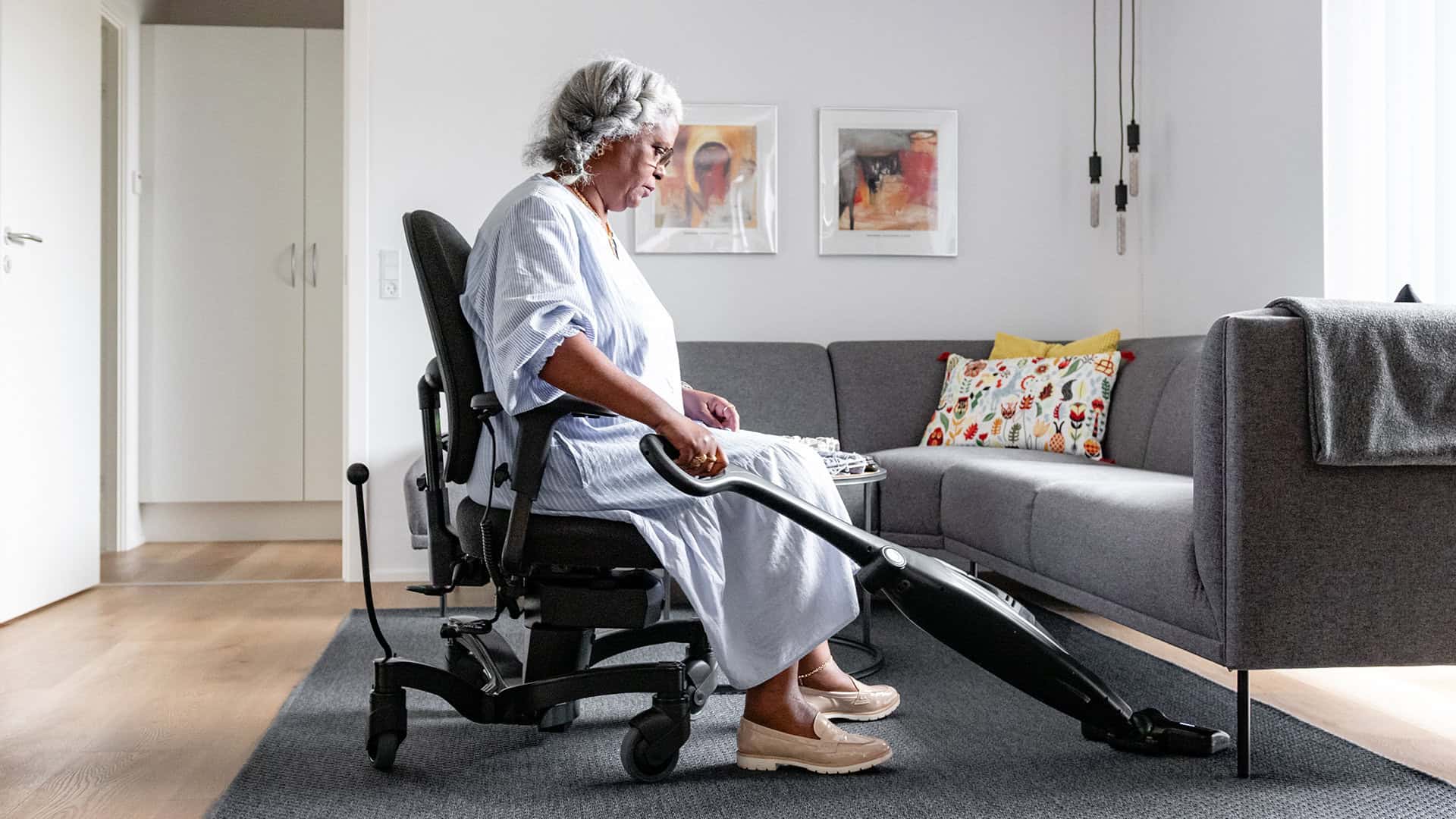
Adopting evidence-based practices in home care is vital for promoting autonomy among the elderly. Advanced adaptive equipment, like VELA chairs, revolutionizes personal mobility for seniors by incorporating stable, ergonomic designs that reduce fall risk. Marie, an elderly woman, uses a VELA chair and can now confidently navigate her home, thereby significantly enhancing her security and independence.
As more seniors face the challenges of traditional nursing homes, from high costs to the potential loss of independence, exploring alternative solutions becomes increasingly urgent. Aging adults need to remain in their comfortable home environments while receiving the support they need. This is where innovative tools like VELA chairs become a viable solution. The VELA Independence Chair is a medically approved mobility chair designed for use at home, offering enhanced safety and freedom of movement while seated. It supports daily activities like cooking, dressing, or transferring, all while reducing the load on informal caregivers.
Top independent living providers and cost considerations
Independent living providers such as Brookdale Senior Living and Atria Senior Living are lauded for their strong safety protocols and activities tailored to the elderly’s needs. Testimonials frequently highlight personalized care and innovative mobility solutions that significantly improve residents’ quality of life. The average cost for these services ranges between $2,500 to $4,000 per month, varying by location and amenities. State-supported programs, drawing on NIDILRR’s research, help maintain the affordability of these services for more families. Additionally, recent employment data from the National Trends in Disability Employment (nTIDE) reports indicate that, as of mid-2025, employment rates for people with disabilities remain stable but have plateaued around 37-38%. This highlights the continued need for policies and assistive technologies that enhance economic inclusion and support independent living [4][5].
State-supported programs and regulatory highlights
State-supported programs utilizing NIDILRR research provide essential assistance through Medicaid Home and Community-Based Services (HCBS) waivers. These programs, which integrate evidence from NIDILRR, offer tailored aid that enhances independent living. Partnerships between NIDILRR grantees and community action agencies enable states to roll out evidence-based fall prevention and mobility programs, directly impacting senior safety and autonomy. The National Institutes of Health (NIH) is also actively updating its Research Plan on Rehabilitation for 2026-2030, seeking increased scientific rigor, community input, and relevance to lived experiences in rehabilitation research [3]. Recent updates by the National Center for Medical Rehabilitation Research (NCMRR) further strengthen support for early career investigators, encourage translational and biomechanical modeling research, and promote virtual conference formats for wider professional access [1].
In summary, the National Institute on Disability, Independent Living, and Rehabilitation Research (NIDILRR) is instrumental in advancing elderly independence and home care. According to America’s Health Rankings, older adults typically face more complex health challenges, which underscores the vital role of NIDILRR in fostering a future where everyone can age with dignity and independence. Integrating its research findings into local care models, supported by advanced solutions like VELA chairs and the latest AI-driven technologies and wearables, substantially enhances safety, autonomy, and quality of life for aging adults nationwide.
Exploring alternatives to nursing homes
Mobility solutions like the VELA Chair can significantly assist seniors in maintaining independence in their own homes. The central brake on these chairs provides crucial safety, while the electric height adjustability ensures easy transfers and promotes independence in daily tasks. With VELA chairs, seniors can confidently perform activities such as cooking, dressing, and cleaning, which might otherwise be compromised due to mobility issues. By incorporating such innovative tools, the need for transitioning to a nursing home can often be delayed. For many, life without the VELA Chair means facing daily challenges and a higher risk of injury, whereas life with it allows for greater dignity, freedom, and energy-saving. While VELA is not the only solution, it remains a practical and proven option for promoting aging in place with grace and security.
Key industry and technology resources
- Assistive Technology Industry Association (ATIA) – Industry hub for AT developments, conferences, and professional resources.
- CES Accessibility Topics – Overview of 2026 innovations in AI assistants, voice activation, and inclusive design for disabilities.
- Level Access: AI and Assistive Tech Advancements – Details on AI tools like Microsoft Seeing AI, Be My Eyes, and BCIs for mobility and vision support.
- First Aid for the Blind: August 2025 Assistive Tech Roundup – Updates on Meta Ray-Ban Live AI, Speakaboo, and Glide device delays for low-vision mobility.
- Double Tap Podcast: CES 2026 Accessibility – Expert discussion on AI robotics, wearables, Braille costs, and blind user adoption trends (Jan 2026).