

Updated September 2025: We have updated the article with the latest advances in assistive technology, including smart wheelchairs with AI navigation, IoT-enabled devices, improved ergonomic and adaptive interfaces, and recent NDIS trends supporting flexible, participant-led Independent Living Options (ILO). Global policy and regulatory initiatives improving access to assistive devices are also included.
Empowering Independent Living Through NDIS Supports
The National Disability Insurance Scheme (NDIS) plays a pivotal role in fostering independence for over 500,000 Australians living with disabilities. By offering tailored living solutions, the NDIS emphasizes individual choice and empowerment. According to the National Disability Insurance Agency (NDIA), these options encompass both Individualised Living Options (ILO) and Supported Independent Living (SIL) arrangements, each designed to enhance autonomy and quality of life.
Understanding NDIS Independent Living Options
Individualised Living Options (ILO) provide a personalized approach, encouraging participants to select their preferred living environment and cohabitants. The NDIA defines ILO as a support system that enables participants to live in ways that best suit them, providing funding to help make choices about where and with whom they live. In contrast, Supported Independent Living (SIL) offers structured assistance with daily tasks, ideal for those who need ongoing support.
Recent developments in NDIS support models focus on flexibility and user control, allowing participants to shape their daily routines, select housemates, or receive support tailored to their specific situation, whether living alone or with others. The pathways for accessing funding and support have also been streamlined to enable faster and more person-centered implementation of ILO plans, reflecting the latest policy and practice trends.[2][3][4]
For individuals considering these options, meeting specific eligibility criteria is crucial. Applicants must be Australian citizens, permanent residents, or hold a Protected Special Category Visa, be under 65 at the time of application, and require significant support to facilitate independent living. A real-life case is Sarah, who transitioned from SIL to an ILO arrangement. Life Without Barriers outlines detailed guidelines to assist such transitions seamlessly.
Exploring Types of Independent Living Arrangements
The NDIS supports a variety of living arrangements, such as house sharing, private rentals, and public housing. Mainstream housing options enable participants to live in community settings, often with housemates to share costs. According to the Endeavour Foundation, supported accommodation and host arrangements offer more structured living with specialized support.
Emerging options increasingly emphasize user co-design and adaptive supports. Arrangements are becoming more participant-driven, with flexible supports that can respond dynamically to changing needs and preferences.[2]
Funding and Support Planning for Independent Living
Understanding what the NDIS will and won’t fund is pivotal for participants. While the NDIS covers essential support services, it does not cover rental or mortgage payments. Participants can leverage resources like the Disability Support Pension for these costs. According to Focus Care Australia, creating a housing goals plan is a vital first step, coordinating with support providers to ensure all needs are met.
Recent regulatory developments and government initiatives are also improving access to technology and support services worldwide. For example, several countries have launched programs and established specialized centers making assistive devices and supports more affordable and widely available, helping to remove barriers participants may have previously faced.[5][6]
Support coordinators play a crucial role in designing effective plans. They assist participants in outlining their goals, identifying necessary supports, and coordinating with service providers. Emma, as an example, successfully transitioned to living independently with coordinated supports, highlighting the critical role these coordinators play in the empowerment process.
Implementing Your Independent Living Plan
The transition to independent living involves thorough assessment and planning. This includes determining housing goals, organizing support services, and making necessary adjustments as needs evolve. Building natural supports, such as friendships and community ties, enhances this experience, providing stability beyond formal services.
Assistive devices are advancing rapidly to improve user experience in independent living. Technology now features smart powered wheelchairs with artificial intelligence and autonomous navigation, enabling individuals to program destinations and move more safely with reduced effort. Retrofit kits for powered wheelchairs and other mobility aids can upgrade existing equipment with new smart functionalities, reducing the need for a complete replacement.[1][7]
Further, wearable and Internet of Things (IoT)-enabled devices—such as AI-powered prosthetics, adaptive keyboards, voice-controlled devices, and health monitoring sensors—are becoming increasingly accessible and are revolutionizing how participants manage daily life, enhance mobility, and communicate. These tools are particularly beneficial for users with reduced dexterity, offering customizable interfaces and hands-free control options.[5][7]
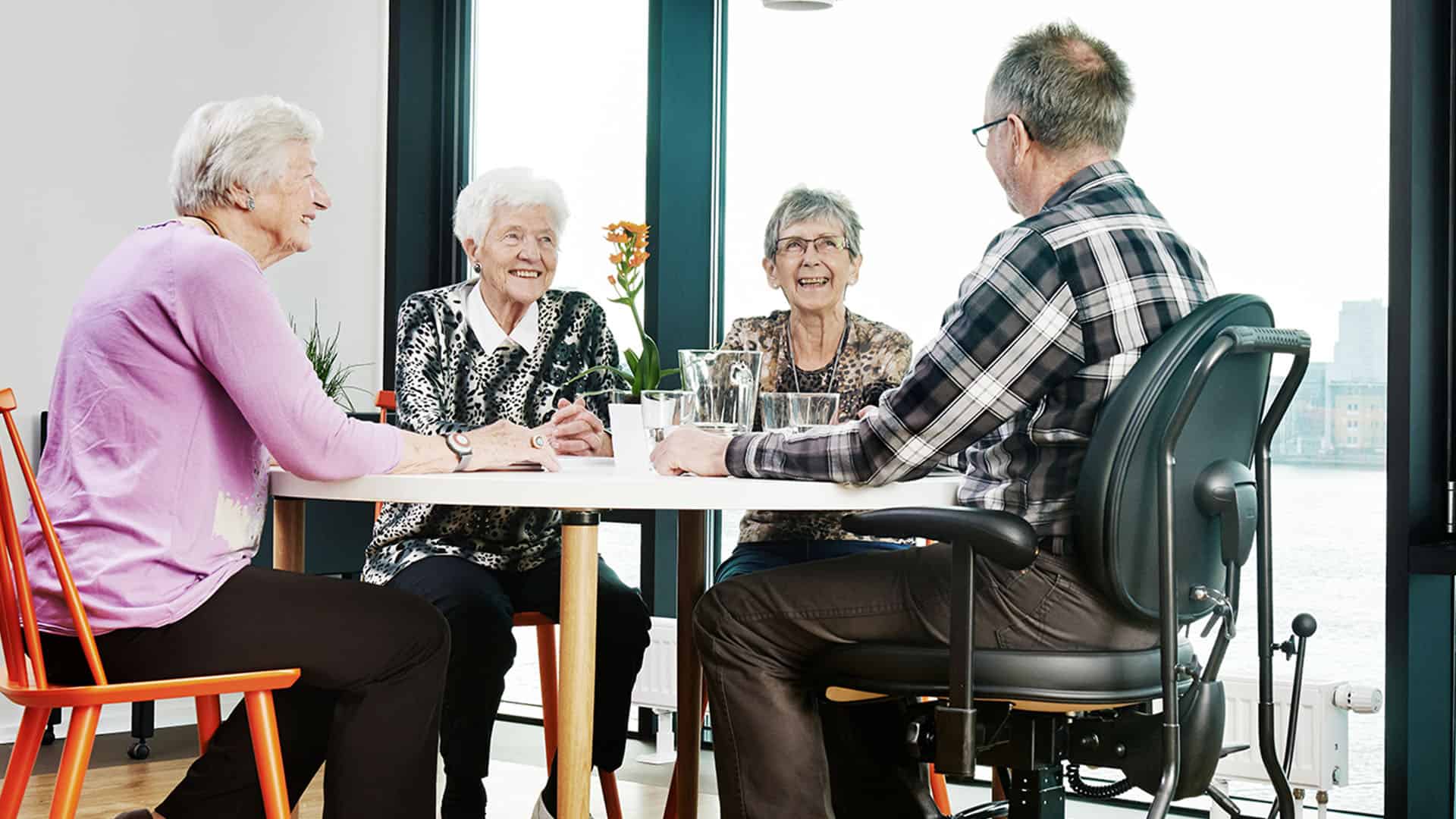
Consider Mike, whose integration into a community living arrangement exemplifies successful implementation. Regular evaluations and adjustments were key, ensuring that his living situation continued to meet his evolving needs while fostering independence. Addressing the challenges of institutional living, older adults often seek alternatives that allow them to remain in their homes longer. The shift from nursing homes to independent living requires solutions that enhance daily functionality and safety. One such solution is the VELA Independence Chair. This medically approved mobility chair is designed for home use, offering safety, ease of movement while seated, and support for daily activities like cooking, dressing, or transferring—all while reducing the burden on informal caregivers.
Supporting Aging in Place: A Practical Option
With the growing emphasis on aging in place, mobility solutions like the VELA Independence Chair present viable options for maintaining independence at home. This chair addresses key challenges encountered by seniors and individuals with disabilities, such as ensuring safety with its central brake feature, allowing effortless movement with electric height adjustability, and facilitating easy transfers. These features significantly alleviate the daily physical demands on both the user and informal caregivers, potentially delaying or altogether avoiding the need for nursing facility placements. Imagine the difference: a home where loved ones can prepare meals, engage in leisurely activities, and navigate spaces without assistance, versus a setting where reliance on continual external help is a norm. While VELA is not the sole solution, it offers a practical method for safely preserving dignity, freedom, and energy, greatly enhancing the quality of life for those wishing to stay independent longer. Learn more about Senior Mobility Solutions.
Sources
- Farris et al., Recent trends in assistive technology for mobility: improved user-technology integration, PMC (2025)
- Compass Care, NDIS Accommodation Options & Services in 2025
- Equal Accessibility LLC, Innovations in Assistive Technology
- AbilityMT, Exciting Assistive Technology for People with Disabilities
- Kanda, Individualised Living Options (ILO) NDIS Support
- Next Market Research, Disabled and Elderly Assistive Device Market 2025-2030
- Scope Australia, Individualised Living Options Providers 2025
- National Disability Insurance Agency – Individualised Living Options
- Life Without Barriers – Individualised Living Options
- Endeavour Foundation – Housing Options NDIS
- Focus Care Australia – Independent Living Options NDIS