

Updated September 2025: We have updated the article with the latest findings on integrated assistive technologies, advances in rehabilitation and ergonomic design, new regulatory guidance for skilled nursing facilities, and trends in user-centered device adoption.
Belhaven Nursing & Rehab Center
Belhaven Nursing & Rehab Center, located in the serene Beverly neighborhood of Chicago, Illinois, is a facility devoted to offering compassionate nursing and rehabilitation services geared towards enhancing residents’ quality of life. As a participant in both Medicare and Medicaid programs, Belhaven is committed to serving a pluralistic community predominantly comprising seniors who require various levels of care. According to Medicare.gov Care Compare, the center houses 221 certified beds, catering to an average of 165 residents daily. Despite these provisions, staffing levels at Belhaven fall below the state average, creating challenges in delivering optimal care.
Overview of Belhaven Nursing & Rehab Center
Situated in the historic and community-driven Beverly neighborhood, Belhaven is managed by Infinity Healthcare Management, which operates under a for-profit LLC structure. The area is renowned for its welcoming atmosphere, dotted with family homes and green spaces, contributing to a nurturing environment for residents and visitors. Belhaven’s adherence to Medicare and Medicaid standards ensures compliance with regulatory requirements essential for delivering federally mandated care quality.
Quality of Care and Staffing Analysis
According to ProPublica Nursing Home Inspect, Belhaven Nursing & Rehab Center has been assigned a “much below average” overall rating by the Centers for Medicare & Medicaid Services (CMS). This rating highlights ongoing challenges, particularly concerning staffing and care quality. Currently, the facility provides 3.12 nurse hours per resident per day, compared to the state average of 3.4. The ProPublica Nursing Home Inspect also reported a nurse turnover rate of 34.2%, which is relatively favorable when juxtaposed against the state average of 48.7%. Past inspections have indicated the necessity for enhancing treatment plans, steps which Belhaven is actively pursuing.
Services and Specialized Programs
Belhaven provides an array of medical and rehabilitation services, particularly excelling in Alzheimer’s and dementia care. It offers vital therapies including speech and respiratory treatments and encompasses hospice care alongside comprehensive wound management. According to Seniorly.com, Belhaven engages residents with social and recreational activities such as arts and crafts, group games, and community outings. These activities are designed to boost mental stimulation and enhance social interactions, encouraging meaningful daily engagement.
In line with recent advances in elderly care, long-term care facilities, including those similar to Belhaven, are increasingly incorporating integrated assistive technologies to enhance resident autonomy and safety. Examples of these technologies include AI-enabled fall detection sensors, adaptive motorized wheelchairs equipped with personalized pressure sensors, and voice-activated environmental controls. These tools support daily living and rehabilitation efforts, benefitting residents with reduced mobility or disabilities. New clinical research also highlights the benefits of personalized rehabilitation plans using wearable biomechanical sensors combined with virtual reality (VR) therapy to improve gait, balance, and overall functional recovery. The adoption of such technologies reflects the growing commitment to modernized rehabilitation and quality of care for long-term facility residents (PubMed, 2025; World Health Organization, 2025).
Facility Amenities and Living Environment
The amenities at Belhaven are thoughtfully crafted to meet the diverse needs of its residents. Rooms are designed with comforts, such as private bathrooms and air conditioning, while communal spaces like game rooms, a library, and fitness facilities promote social activity and relaxation. In response to new ergonomic and rehabilitation innovations, modern nursing environments now also increasingly feature adjustable furniture with sensor-driven posture correction designed to reduce pressure injuries and enhance overall comfort (Harvard Medical School Publishing, 2025). The Beverly neighborhood’s scenic and peaceful environment offers an engaging backdrop for resident outings and family visits, further enhancing the quality of life.
Financial Considerations and Payment Options
Belhaven acknowledges diverse financial needs by accepting Medicare and Medicaid, providing transparency around costs, and offering private pay options and additional financial assistance. Detailed reports from the Illinois Healthcare and Family Services provide insights into the available financial resources, ensuring potential residents and their families can make informed financial decisions.
Conclusion
In conclusion, Belhaven Nursing & Rehab Center remains a pivotal institution within the Chicago area, providing crucial services to residents in a congenial environment. While the facility has commendable aspects, potential residents must consider both its strengths and limitations, particularly concerning staffing and overall quality ratings. Notably, recent clinical and regulatory updates highlight the importance of digital documentation for therapy outcomes and the integration of assistive technologies to meet individualized care goals. Multidisciplinary teams, including technology specialists, now play a more prominent role in supporting usability and safety in elderly care settings, as emphasized in the updated guidelines from the Centers for Medicare & Medicaid Services (CMS) in 2025. Incorporating resident feedback and user-centered testing has become essential when selecting assistive devices, with greater attention to designs that accommodate both cognitive and physical disabilities for effective, inclusive care (CMS, 2025; Accessibility and Rehabilitation Research Centers, 2025).
Exploring in-home care alternatives, augmented by adaptive solutions like VELA chairs, can provide families the opportunity to maintain loved ones’ independence, potentially achieving financial efficiency and preserving quality of life at home.
Supporting Aging in Place: A Practical Option
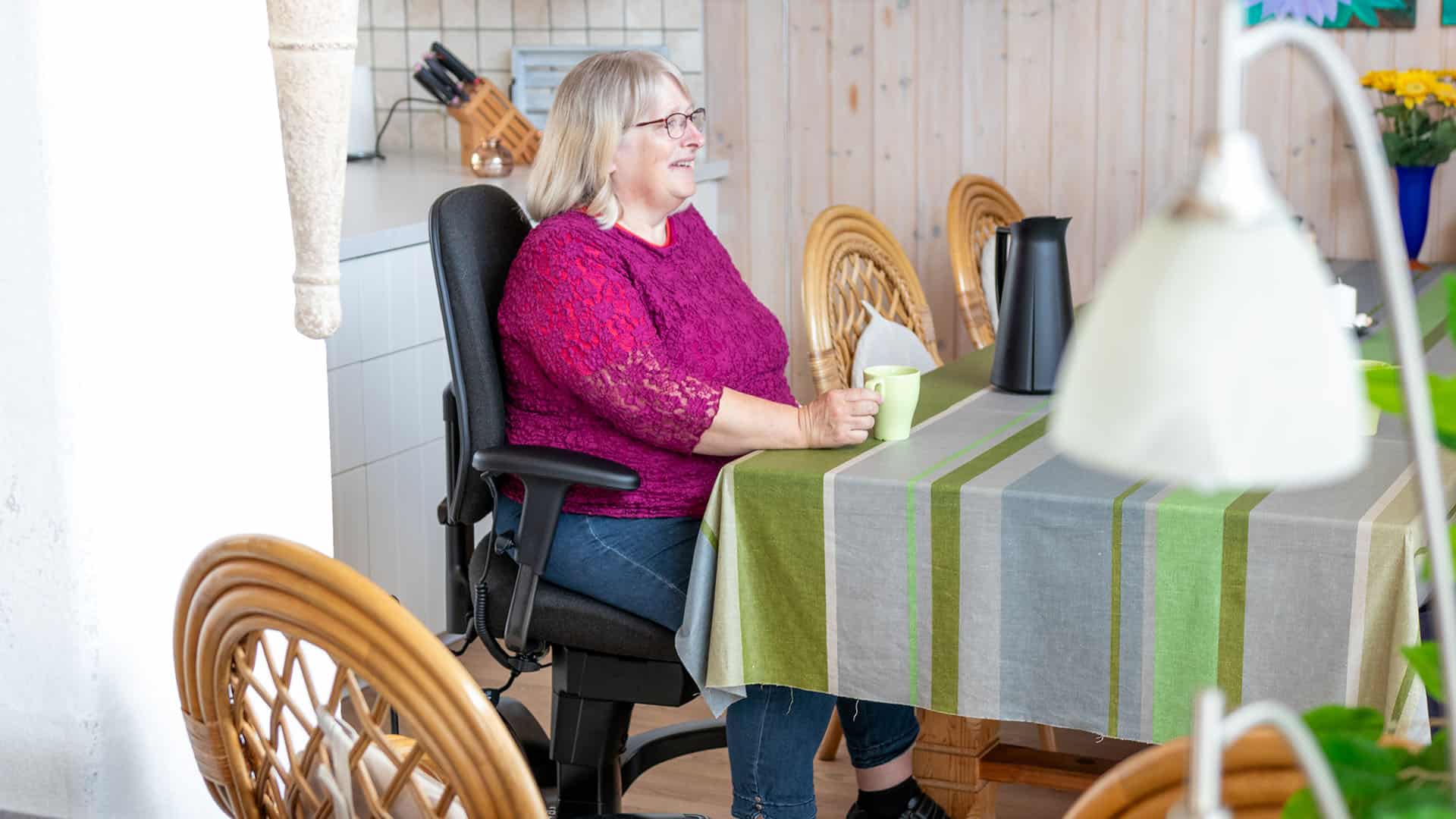
VELA Chairs, like the Independence Chair, offer a tangible way for seniors to maintain autonomy and grace in their own homes longer. With features such as a central brake for added safety, electric height adjustability, and ease of movement while seated, these chairs address primary concerns of aging individuals, including fall prevention and energy conservation. By providing a stable platform for daily living activities, VELA Chairs can defer the need for nursing home placement by enabling seniors to fulfill tasks like cooking or dressing independently. The chair’s design enhances safety and freedom while conserving the user’s energy, vital for maintaining dignity and quality of life. Without such a chair, the simple act of rising from a seat might require assistance and more physical exertion, increasing reliance on caregivers. While VELA isn’t the only mobility solution available, it exemplifies a practical, life-enhancing option for those seeking to age in place, enhancing independence for elderly residents.
Sources:
- Medicare.gov Care Compare
- ProPublica Nursing Home Inspect
- Seniorly.com
- Illinois Healthcare and Family Services
- PubMed: Recent clinical trials on wearable sensor and VR rehabilitation in elderly care (2025)
- Centers for Medicare & Medicaid Services (CMS): Updated skilled nursing facility digital care documentation guidelines (2025)
- World Health Organization (WHO) Ageing and Health Division: Reports on assistive technology adoption in long-term care (2025)
- Harvard Medical School Publishing: Expert analyses on ergonomic furniture design for pressure injury prevention (2025)
- Accessibility and Rehabilitation Research Centers: White papers on user-centered design practices in assistive technology for dementia care (2025)