

Updated January 2026: We have updated the article with recent changes to federal nursing home staffing regulations, refinements to the Medicare Five-Star rating system, advancements in AI-powered assistive technologies and fall prevention, trends in smart mobility aids and wearables, and a detailed look at current workforce challenges in long-term care.
Overview of Brown’s Health & Rehabilitation Center
Brown’s Health & Rehabilitation Center, located in Georgia, serves as a beacon of care and compassion within the community. This nursing home operates not just as a facility but as a sanctuary for elderly individuals seeking specialized care with a personal touch. Founded over two decades ago, Brown’s has a rich history of dedication to providing exceptional health and rehabilitation services, aiming to enhance its residents’ quality of life. According to ProPublica Nursing Home Inspect, Brown’s is recognized for its transparent ownership and management structure, ensuring that all aspects of care meet stringent standards.
The facility offers various amenities catering to its residents’ diverse needs, including spacious living quarters, landscaped gardens for relaxation, and well-equipped recreational areas. Residents can enjoy daily activities such as gardening clubs and art therapy sessions, fostering a tight-knit community atmosphere. Testimonials from residents and staff alike indicate high satisfaction with both the living environment and the personalized services provided.
Quality of care and Medicare ratings
When selecting a nursing home, one critical consideration is the quality of care, often assessed through Medicare star ratings. These ratings provide insights into a facility’s compliance with safety, health, and staffing standards, which are crucial for families when making informed decisions. According to Medicare.gov and CMS.gov, Brown’s Health & Rehabilitation Center maintains a commendable rating, now reported with updated federal performance metrics for transparency as of July 2025. Notably, as of October 2025, CMS revised its Five-Star rating methodology to consider only the two most recent surveys instead of three, and has added antipsychotic medication usage as a factor in the quality rating, affecting many facilities. Regular inspections ensure adherence to quality measures, providing families peace of mind regarding their loved one’s safety and well-being.
CMS Five-Star Rating Methodology Update 2025
Until early 2026, the staff-to-resident ratio at Brown’s was maintained to ensure personalized attention, in line with previous CMS mandates for 24/7 registered nurse coverage. However, beginning February 2, 2026, the federal staffing mandate requiring 24/7 RN coverage in Medicare/Medicaid-certified nursing homes has been repealed. This regulatory change was enacted due to widespread workforce shortages, particularly in rural and underserved areas, and it is now up to facilities to determine their own nurse staffing plans within broader safety guidelines. Providers continue to face challenges in recruiting and retaining nursing staff, requiring further innovation and adaptability to maintain high standards of care.
Federal Register, Nursing Home Staffing Repeal 2026
Enhanced federal regulations in 2025 required stricter staffing verification via Payroll Based Journal reporting, tighter controls on psychotropic medication use, and new mandates supporting resident rights and health equity by analyzing disparities in care. Oversight on admissions and discharges was strengthened to protect residents, ensuring compliance and quality.
CMS, Updated Nursing Home Surveyor Guidance (2025), Sandberg Phoenix, Major CMS Revisions 2025, CMS Guidance Summary PDF, PALTMed, CMS Surveyor Guidance 2025
Financial considerations for residents
Financial planning is essential when considering a nursing home. Brown’s Health & Rehabilitation Center accepts both Medicare and Medicaid, offering families financial flexibility. Various private pay options and insurance considerations are available, accommodating different financial circumstances. According to National Investment Center for Seniors Housing & Care (NIC), proper financial planning is vital, and families can access resources and advice to navigate the financial aspects of nursing home care effectively.
Families can explore detailed guides and case studies to aid in understanding potential expenses and the necessary financial planning involved when choosing Brown’s as a home for their loved ones.
Specialized services and programs at Brown’s
Brown’s Health & Rehabilitation Center provides a wide array of specialized services and programs tailored to the unique needs of each resident. These include comprehensive rehabilitation services, long-term care options, and memory care capabilities for residents with cognitive impairments. The center actively promotes community engagement through various resident activities, such as music therapy and social clubs, encouraging interaction and participation. Success stories and program outcomes shared by current or former residents underscore the significant positive impact these services have on improving quality of life.
Brown’s integrates the latest advances in assistive technology and telehealth services. Residents benefit from AI-powered smart assistive devices, including adaptive mobility and smart wheelchairs equipped with GPS navigation, collision avoidance, health monitoring, automatic braking, app-based customization, and voice controls, significantly increasing independence and safety. Recent years have seen accelerated but still limited adoption of AI in nursing homes, with national AI use in such settings rising from 3.1% in 2023 to 4.5% in 2025. The main uses include fall detection, clinical decision support, and revenue cycle tools. Additional smart mobility aids and wearables now include AI-enabled walkers, smart grab bars with pressure sensors, and voice-activated controls designed to help reduce fall risk. Wearable devices that track vital signs, sleep patterns, and activity levels have become standard, enabling real-time alerts and timely caregiver responses.
Wearable robotics and customized 3D-printed assistive solutions further enhance comfort and mobility for residents. Ergonomic rehabilitation devices with integrated sensors can detect falls, monitor movement, and offer real-time feedback, resulting in improved safety and rehabilitation outcomes. Telehealth platforms support access to healthcare professionals and enable continuous, remote health monitoring for more timely interventions and enhanced autonomy.
SynchronyFL, Trends in Healthcare 2025, ButterflyMX, Senior Living Technology Trends 2025, Everything Medical Online, Mobility Aid Technology 2025, MyCareConcierge.org, Senior Care Tech 2025, Heisinger Bluffs, Senior Living Trends 2025, UnitedHealthcare Community & State, Technology in Home-Based Care, iHealthcare Analyst, Geriatric Assistive Devices 2025, Health Affairs, AI in Nursing Homes: Trends and Limits 2025
Industry trends affecting Brown’s and similar facilities
Understanding industry trends is essential for navigating future challenges and opportunities within the nursing home sector. The demand for nursing homes remains steady, with occupancy rates at approximately 84.5% as of the third quarter of 2024, according to NIC. Upcoming staffing challenges and regulatory changes anticipated in 2025 and 2026 necessitate strategic planning and innovation for facilities like Brown’s.
Health Affairs, AI in Nursing Homes: Trends and Limits 2025
Expert commentary highlights the importance of adapting to changes, with a focus on enhancing facility management and maintaining high standards of care to effectively meet future regulatory demands.
The integration of AI-powered predictive analytics, smart behavioral tracking, and intelligent assistive devices now enables nursing homes to proactively manage fall risks and health interventions while supporting independence for residents. Smart home devices, such as voice assistants, automated lighting, and health sensors, along with expanded telemedicine access, have become vital in supporting daily activities, medication management, and remote health consultations for seniors. While the adoption rate of AI in nursing homes is rising, it remains below the broader healthcare average, primarily due to ongoing staffing shortages and technology implementation barriers. These integrations are accelerating personalized, home-like experiences and health equity initiatives within nursing facilities.
ButterflyMX, Senior Living Technology Trends 2025, MyCareConcierge.org, Senior Care Tech 2025, Heisinger Bluffs, Senior Living Trends 2025, UnitedHealthcare Community & State, Technology in Home-Based Care, Health Affairs, AI in Nursing Homes: Trends and Limits 2025
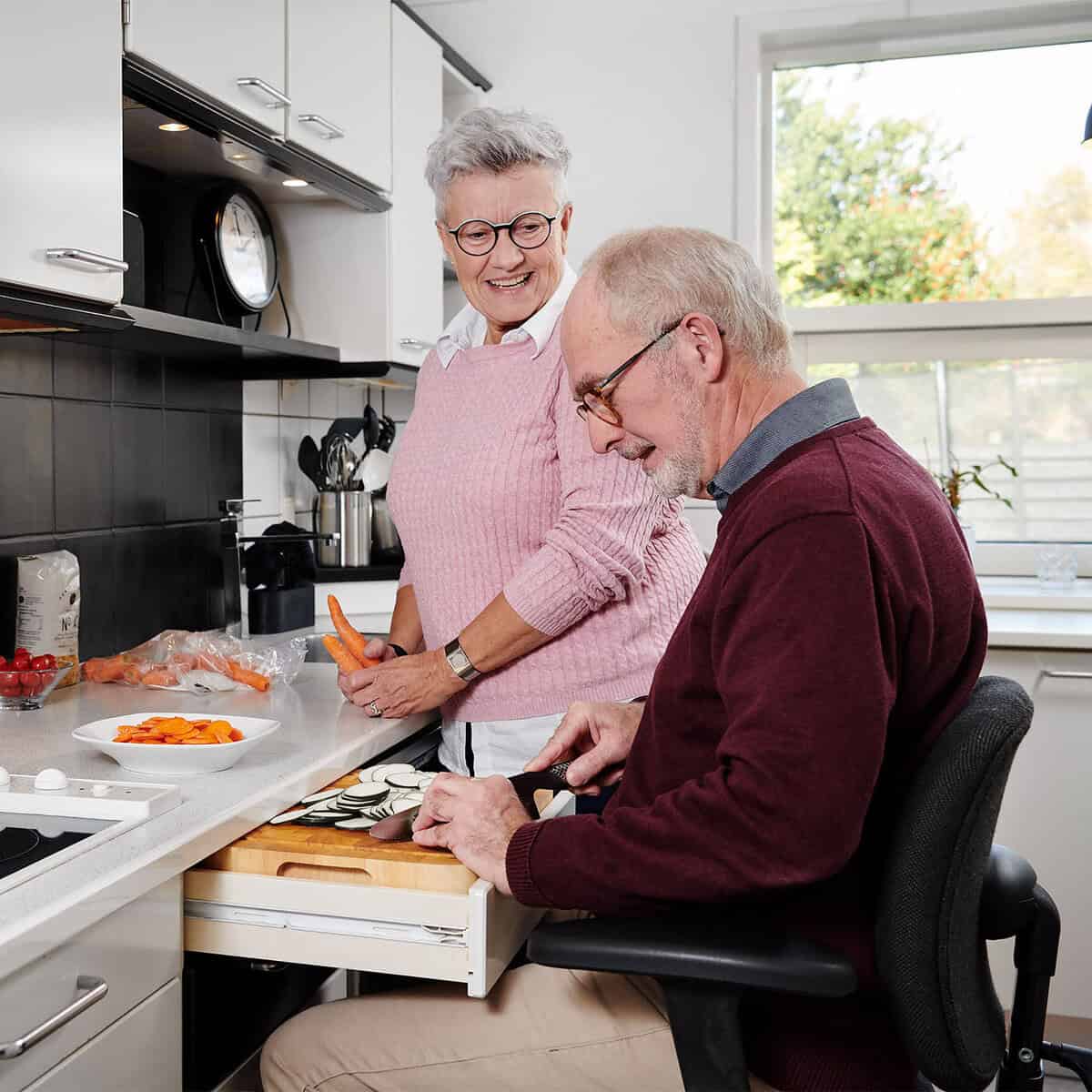
Mobility solutions like the VELA Independence Chair can significantly contribute to seniors’ ability to remain at home, delaying or avoiding the need for nursing home care. This innovative chair features a central brake for safety, electric height adjustability, and easy movement while seated, which are crucial for enhancing safety and energy efficiency. Whether aiding everyday activities such as cooking or simply offering a comfortable setting for relaxation, the chair emphasizes dignity and freedom.
By allowing individuals to carry out more daily tasks independently, the VELA Chair helps maintain a quality life balance between dependence and autonomy. It exemplifies one of several supportive seating options that address key areas like fall prevention and ease of transfers, contributing to an improved overall lifestyle for seniors seeking to age in place. However, while it offers practical assistance, it’s crucial for families to evaluate all available resources when considering mobility solutions for loved ones at home.