

Updated September 2025: We have updated the article with new findings on China’s rapidly growing elderly population, ongoing shortages in nursing bed supply, and significant advances in smart senior care using AI, IoT, and robotics. The article now covers state-of-the-art assistive technologies, digital inclusion efforts, and policy trends shaping culturally tailored senior care in China and abroad.
Exploring the Dual Nature of Chinese Nursing Homes
When discussing “Chinese nursing home,” we refer to facilities both within China addressing the needs of its aging population, and those abroad serving Chinese-speaking communities. This dual approach caters to strong cultural and linguistic needs. For instance, in 2019, about 39% of Chinese adults in the U.S. had limited English proficiency (U.S. Senior Living).
The rapid growth of eldercare facilities in China is significant, and recent demographic shifts indicate a senior population exceeding 300 million by 2025 (). To address this, the Chinese government aims to increase the number of nursing beds to over 8 million by 2025, although a notable gap between supply and demand remains (). The number of eldercare facilities is expected to surpass 8,000 by 2025 (EldExpo).
Navigating Cultural and Linguistic Needs in Chinese Nursing Homes
Chinese-specific nursing homes are pivotal in addressing cultural and linguistic needs for elderly Chinese residents both in the U.S. and China. These homes provide care in familiar languages, typically offering staff fluent in Mandarin and Cantonese, along with Chinese cuisine and cultural activities. The cultural significance of tailored services cannot be overstated. Residents benefit from environments that respect familial piety and community values—a cornerstone of Chinese culture. This demand is driven by the preferences of Chinese elders for care and community engagement respecting their heritage.
For example, many Chinese seniors in the U.S. prefer environments that replicate familiar societal structures. According to the National Library of Medicine, a significant number of Asian Americans consider nursing homes only if they meet cultural expectations. Residents often face challenges if their cultural and linguistic needs are not addressed, underscoring the importance of culturally tailored care.
Current and Emerging Trends in Chinese Senior Care
Eldercare in China and the U.S. is evolving with innovative integrated care models and technological advancements. In China, both governmental and private sectors are crucial in expanding this market, predicted to reach $800 billion by 2025 (International Trade Administration).
Integrated care facilities offer complementary medical services, focusing on holistic health. Notably, the latest wave of smart technology—such as AI-powered smart glasses, brain-computer interface prosthetics, predictive health monitoring, and robotic exoskeletons—is transforming elder care in China (Think Beyond The Chair; CEC Capital Group). These devices enhance both mobility and independence, supporting seniors with disabilities in their daily activities and rehabilitation. Virtual and augmented reality (VR/AR) systems, alongside AI-driven 3D printed assistive devices, are improving personalized care and user experience (CEC Capital Group).
Smart senior care now combines internet technologies with traditional Chinese values, aiming to promote digital inclusion but still confronting challenges like digital divides and low utilization rates (Frontiers in Public Health). Expert perspectives emphasize the importance of coordinated policy, caregiver training, and technology access to ensure effective smart care adoption.
U.S. Chinese senior care facilities are similarly embracing technologically advanced solutions while maintaining cultural preferences. This approach ensures a blend of traditional familiarity with modern care advancements, providing a continuum of care that is both culturally resonant and future-oriented.
Selecting the Right Chinese Nursing Home: Key Considerations
Choosing the right Chinese nursing home involves evaluating cultural alignment, language services, and quality of care. Families often prioritize homes with robust language services and cultural programs in Mandarin or Cantonese. According to the CDC, understanding these factors is essential given the delicate nature of transitioning a senior into long-term care.
- Costs: The median monthly cost for a semi-private nursing room in the U.S. is approximately $8,821, while high-end facilities in China target wealthy urbanites (ResearchInChina).
- Evaluating Facilities: Families should consider exploring online reviews and visiting potential facilities to gauge occupancy rates and reputations firsthand. It is increasingly relevant to consider facilities that offer assistive technology integration or specialized digital resources that enhance safety, connectivity, and wellbeing (Think Beyond The Chair).
Ensuring the Best Quality of Life for Chinese Seniors
In conclusion, selecting a Chinese nursing home requires a careful balance of cultural and contemporary care elements. Traditional nursing homes offer structured care environments, but innovative alternatives like home-based solutions, smart assistive technologies, and digital health systems are playing a significant role in enhancing seniors’ quality of life. Progress in ergonomic design and user-technology integration has improved comfort, safety, and practical independence for seniors with disabilities (PMC). Families should consider both traditional and modern care approaches to provide a supportive and enriching environment for their loved ones.
Staying Independent at Home with Support
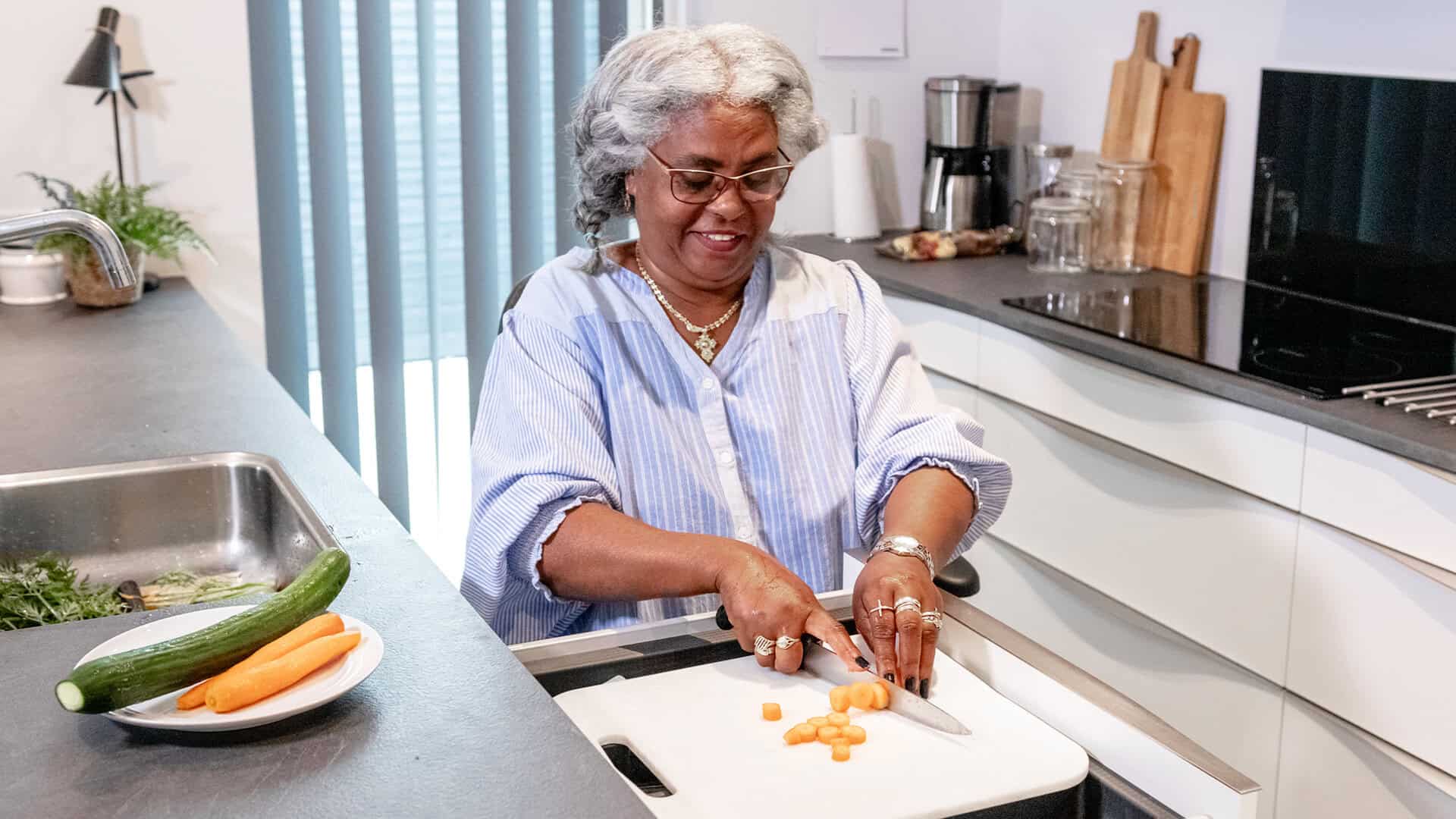
For those seeking to maintain independence while receiving the necessary care, the VELA Chair offers a practical solution. Designed to enhance a senior’s ability to perform daily tasks safely and independently, these chairs provide features like a central brake for stability, electric height adjustability, and easy maneuverability. This can significantly improve life quality, delaying or even preventing the transition to a nursing home. With a VELA Chair, everyday activities such as cooking, dressing, and relaxing become more manageable. By sustaining personal autonomy, these mobility solutions offer profound benefits in safeguarding a senior’s dignity and freedom, while easing the burden on caregivers. Although numerous solutions exist, the introduction of enhancing daily mobility demonstrates a tangible improvement in living standards for aging adults. The broader adoption of smart and ergonomic home adaptations in China and abroad further supports independence and high quality of life for seniors (CEC Capital Group).