

Updated January 2026: We have updated the article with the latest CMS guidelines from the CY 2026 Medicare Physician Fee Schedule Final Rule, including permanent expansions for telehealth in nursing facility visits, the removal of restrictions on telehealth visit frequency, virtual direct supervision provisions, and the new G2211 code for complex, ongoing care. These rules better support flexible, frequent physician oversight and enable more remote clinical and emotional support for residents with reduced mobility.
Updated October 2025: We have updated the article to reflect the latest CMS regulatory guidance on nursing home visitation rights, precise physician visit frequency and delegation standards, updated infection control and electronic reporting requirements, and expanded telehealth services (including audio-only options). The article also addresses current best practices for balancing in-person and remote interactions, as well as ongoing innovation in assistive devices supporting resident mobility and well-being.
How Often to Visit a Parent in a Nursing Home: Finding the Right Balance
Navigating the emotional landscape of visiting a parent in a nursing home can be challenging. The balance between ensuring your loved one’s emotional well-being and managing your own responsibilities is delicate. Regular visits to a nursing home can significantly impact the residents’ mood and mental health, fostering a sense of connection and positivity. According to Eden Senior Health Care, consistent visits are linked to improved mental health and reduced feelings of isolation for nursing home residents.
How Often Should You Visit a Parent in a Nursing Home?
Determining the ideal visit frequency requires a careful assessment of your parent’s needs and preferences. Koelsch Senior Communities suggests starting with visits every other day or every three days, then adjusting based on emotional and physical health requirements. Each resident’s situation is unique, and while some may thrive on frequent visits, others might prefer more space to establish their independence.
Recent regulatory guidance from CMS now allows nursing home residents to receive visitors at any time, with no restrictions on the length, frequency, or number of visits. This flexible approach emphasizes resident-centered care and psychosocial wellbeing, while still maintaining essential infection control measures (LeadingAge; Medicare Advocacy; California Department of Public Health).
For safety, infection control practices remain in place in line with updated electronic reporting requirements for infectious diseases such as COVID-19, RSV, and influenza. Facilities must ensure transparency and apply infection prevention protocols to protect residents and visitors alike (AHCA). CMS has mandated ongoing electronic reporting of these infectious disease data starting January 1, 2025, which informs operational procedures and visitor safety protocols.
Many families find success by maintaining a flexible schedule. For instance, a daughter might visit her father twice a week while allowing other family members to fill in on alternate days. Such arrangements can create a supportive network of visitors without overwhelming the resident.
Factors Influencing Visit Frequency: Personal, Emotional, and Practical Considerations
Several factors can influence how often you visit a loved one in a nursing home. Personal circumstances such as work commitments, distance, and family responsibilities play a significant role. It’s essential to balance these with the emotional bonds and dynamics between family members and the resident.
Regulatory updates clarify that the minimum required physician or non-physician practitioner (NPP) visits follow a set schedule: every 30 days for the first 90 days of admission, then at least every 60 days thereafter, with some delegation to NPPs allowed under state law and facility policy, and a 10-day window permitted for scheduling flexibility (CMS Compliance Group; AAPACN).
However, as of January 2026, significant regulatory changes have expanded access to telehealth for physician and practitioner visits in nursing facilities. The new CMS CY 2026 Medicare Physician Fee Schedule Final Rule has permanently removed frequency limitations for telehealth in subsequent nursing facility visits, which were previously limited to once every 14 days. This allows for more frequent remote check-ins as needed, improving oversight for residents with reduced mobility and reducing the need for in-person transport (Holland & Knight; American Geriatrics Society; American Medical Association; Michigan Health & Hospital Association).
New provisions also allow most direct supervision in nursing facilities to be performed virtually, via real-time audio/video, further supporting safe and efficient care for residents who may not be able to easily attend in-person visits. In addition, the new complexity add-on code G2211 can now be used for nursing facility and home/residence E/M visits to better capture and reimburse for complex, longitudinal care management. These changes promote both effective medical oversight and flexible support, allowing visiting families to better coordinate with professionals without rigid in-person visit schedules (Holland & Knight; American Geriatrics Society). Core physician visit schedule requirements for the first 90 days and every 60 days thereafter remain, as do rules for hospice nurse visits.
At the same time, there are no limits on when family and friends may visit, supporting resident autonomy and emotional health (LeadingAge). Updated policies emphasize infection prevention through practices such as masking and improved ventilation, rather than restriction of visit length or frequency (Medicare Advocacy; California Department of Public Health).
According to NursingHome411/LTCCC, it’s important to consider the resident’s health status and nursing home policies. Encouraging independence while preventing loneliness involves finding a visitation rhythm that supports the resident without overshadowing their autonomy. An example from a nursing home scenario might include a resident who enjoys independence and regular activities but still appreciates weekly check-ins to maintain family ties.
For families living at a considerable distance, integrating physical visits with digital communication like video calls can help maintain regular contact without frequent travel. The expanded telehealth rules now in effect for 2026 allow more frequent, flexible remote consultations for nursing home residents, including audio-only options. This enables both residents and professional caregivers to participate in oversight, training, or care coordination virtually, while supporting emotional well-being and reducing transportation burdens (Holland & Knight; American Medical Association).
The Benefits of Regular and Meaningful Visits
Regular visits can offer profound emotional and psychological benefits, such as mood elevation and diminished loneliness. According to the Journal of the American Medical Directors Association, structured, meaningful engagements during visits enhance the resident’s overall well-being. Activities such as enjoying a shared meal, participating in hobbies, or simply having a quiet conversation can significantly uplift residents. By personalizing visit activities to align with your parent’s interests, you can make the time spent together more impactful.
Tips for Planning Visits and Making the Most of Your Time
Planning visits requires both strategic organization and thoughtful intention. Here are several tips to maximize the impact of your visits:
- Create a structured schedule: Develop a consistent visiting routine that suits both your timeline and your parent’s preferences. Consistency can provide a sense of reliability and joy for residents.
- Engage in meaningful activities: Whether it’s sharing stories, listening to music, or going for a walk around the facility, engaging in meaningful activities can strengthen your connection. In some cases, accompanying your parent to a regular social event at the nursing home might also be enriching.
- Use alternatives for in-person visits: Leverage technology for video calls, send care packages with favorite treats or photos, and write letters to keep the connection strong when physical visits aren’t feasible Eden Senior Health Care. With updated telehealth and assistive technology, virtual and audio-only options are now widely available for both medical consultations and personal communication (Holland & Knight; American Medical Association).
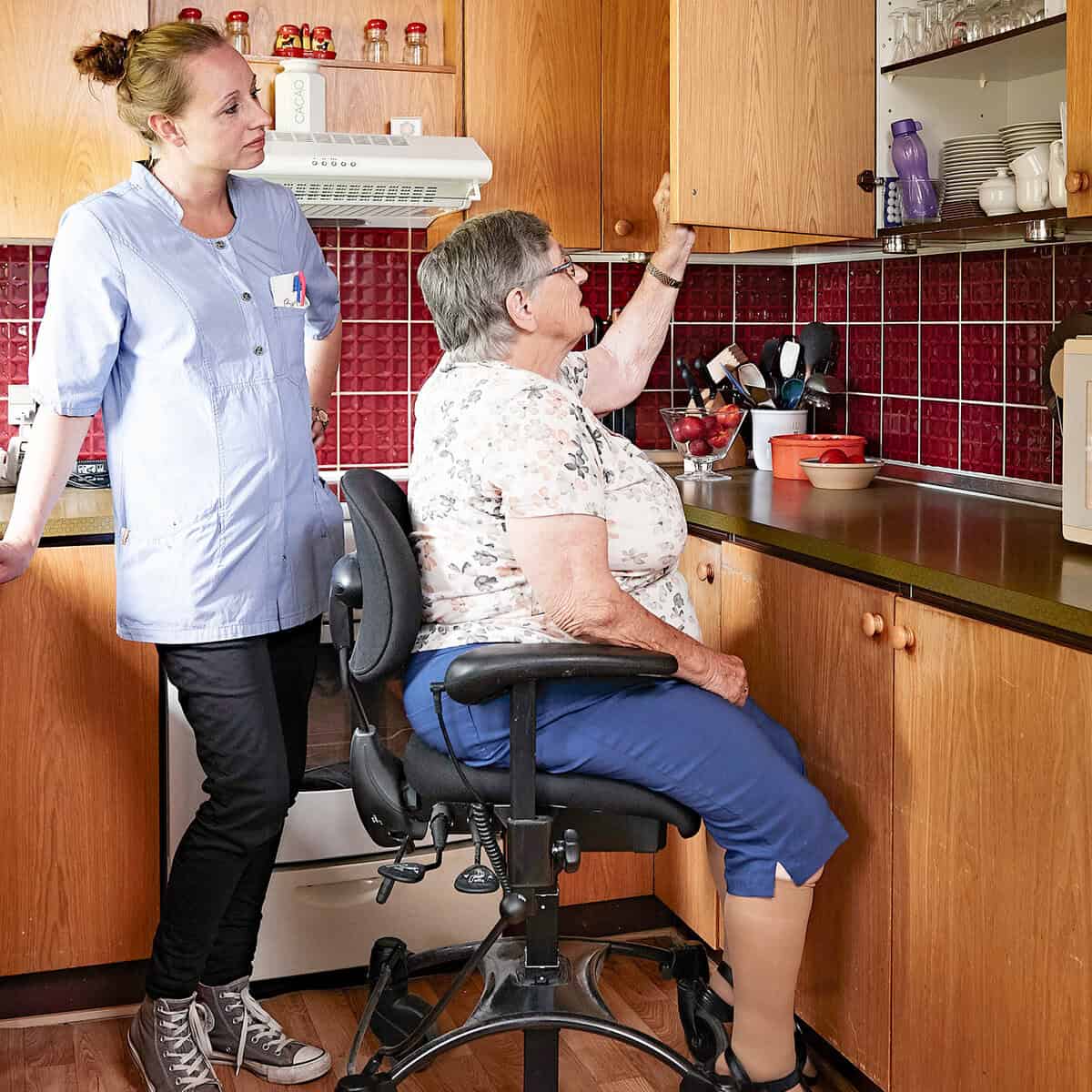
With the challenges of maintaining emotional connections and supporting independence within nursing homes, families might seek additional solutions to enhance their loved ones’ well-being. This is where mobility solutions like VELA chairs come into play. VELA chairs provide a medically approved option to empower seniors to remain independent at home, offering enhanced safety, freedom of movement while seated, and support for daily activities such as cooking, dressing, or transferring. These features alleviate some caregiving burdens and promote active engagement in life’s daily routines.
Supporting Aging in Place: A Practical Option
Embracing the concept of aging in place with tools like the VELA Independence Chair can significantly boost seniors’ ability to remain in their own homes longer. These chairs are designed to address key concerns such as safety, energy conservation, and ease of movement, which can delay the transition to a nursing home. With features like a central brake for enhanced safety, electric height adjustability for simple transfers, and smooth mobility when seated, VELA chairs epitomize dignity, freedom, and safety. They allow seniors to carry out everyday activities such as cooking, cleaning, or relaxing with greater independence and ease. While VELA chairs are not the only solution available, their practical design and functionality make them a proven method to enhance the quality of life for older adults and reduce caregiver stress by supporting help for seniors at home.
References
- CMS Compliance Group: F712 Physician Visits Frequency and Timeliness (2023)
- LeadingAge New CMS Nursing Home Visitation Guidance (2025)
- AAPACN on Physician Services and F-Tag Compliance (2024)
- AHCA CMS Final Rule on Nursing Home NHSN Reporting (2024)
- CMS Visitation Guidance and COVID-19 Impact Studies (2025)
- California Department of Public Health Visitor Requirements (2025)
- CMS 2025 Medicare Physician Fee Schedule Final Rule (Telehealth and Supervision Updates) (2025)
- PALTmed on 2025 Physician Fee Schedule and Telehealth Advances (2025)
- American Academy of Family Physicians: 2023 Hospital and Nursing Home E/M Visit Coding Changes
- CMS Revised Long-Term Care Surveyor Guidance (2025)
- CMS CY 2026 Medicare Physician Fee Schedule Final Rule (2025)
- AGS Comments on CY 2026 Medicare Physician Fee Schedule Proposed Rule (2025)
- AMA 2026 MPFS Final Rule Summary Analysis (2025)
- CMS Releases CY 2026 Physician Fee Schedule Final Rule (2025)