

Updated January 2026: We have updated the article with new findings on AI-powered monitoring, telehealth expansion, wearable assistive tech, advanced smart wheelchairs, and details on Australia’s Support at Home reforms launching in November 2025. The article now reflects recent innovations in in-home nursing and mobility options, workforce and regulatory changes, and Australian-specific industry trends for Melbourne seniors.
In-Home Nursing Care in Melbourne: Meeting the Needs of an Aging Population
The pressing need for high-quality in-home nursing care in Melbourne has reached new heights, reflected by a substantial governmental commitment of $2.2 billion towards the aged care sector. According to the Department of Health and Aged Care, Australia, these funds have led to an expansion of Home Care Packages. This initiative aligns with Melbourne’s demographic trend of a growing aging population, ensuring individuals receive essential care within their own homes.
Understanding in-home nursing care options in Melbourne
In Melbourne, in-home nursing care services cover a broad range of activities essential for maintaining the health and dignity of older adults at home. Services include medical care such as wound management, personal hygiene support, meal preparation, and companionship, addressing both medical and social needs.
Recent advances have significantly modernized these offerings. In-home care now features AI-driven assistive devices, such as wearables and voice-assisted technologies, supporting mobility, medication management, and fall detection. Remote monitoring enables real-time health data sharing, allowing care staff and families to respond proactively and personalize care as needs change. Further, the integration of AI-powered fall detection systems, all-terrain and smart mobility aids with autonomous navigation, and wearable health monitoring (such as pressure sensors and iSee AI glasses for low vision) have contributed to safer, more independent living for seniors. These technologies, together with platforms supporting “hospital at home” models—including virtual check-ins and home-based IV therapy—enable seniors to receive more complex healthcare at home.[1][3][5][13][14][15]
Eligibility for government-funded packages, a crucial step in accessing these services, can be explored on the Gen Aged Care Data website, which outlines the application process. According to firsthand accounts, beneficiaries often note substantial improvements in mental and physical wellbeing, as these services provide tailored support that promotes independence and quality of life.
Navigating the Support at Home Program in Melbourne
The Support at Home Program, a key initiative in Melbourne, was launched in July 2024 to revolutionize home care delivery by offering personalized service models. This program is being expanded and reformed, with new changes scheduled for November 2025 that will streamline needs-based funding, include support for technology-driven care such as telehealth, remote monitoring, and holistic assessments. As explained by AlayaCare and according to the KPMG Australia Aged Care Sector Analysis 2025, new clients undergo a thorough registration and assessment process to determine the level of funding and innovative services—including AI-powered solutions and advanced mobility aids—they are entitled to.[14]
Regulatory reforms in 2025 have redefined how funding is allocated and how providers register, with a strong emphasis on compliance and delivering outcome-focused, personalized service. These reforms also underscore upskilling requirements for the workforce and drive higher quality standards through person-centered care frameworks. Providers are required to demonstrate flexibility by adapting care plans dynamically to incorporate physical health, mental health, nutrition, social connection, and cognitive wellbeing, and now integrate wearables and telehealth as care cornerstones.[1][3][4][11]
Selecting an appropriate care provider is a critical step involving the evaluation of service characteristics and potential risks. Family testimonials from Melbourne underscore the pivotal role of these well-informed choices in ensuring care quality and alignment with personal needs.
Costs and funding for in-home nursing care
Financing in-home nursing care, while potentially overwhelming, can be eased through government subsidies and Home Care Packages. Market.us Media notes that these supports significantly reduce out-of-pocket expenses for families.
Effective financial planning is key to managing costs, and consulting financial advisors who specialize in aged care is advisable. They can offer strategies for budget management and optimization of available care options. Industry developments have increased demand for digital tools that assist care providers and families in scheduling, tracking budgets, and optimizing delivery of services. Flexible funding and real-time digital tools are now considered best practice for streamlined and adaptive care management.[6][2]
Quality standards for in-home nursing in Melbourne
Melbourne’s home care standards are upheld by a stringent regulatory framework that holds providers accountable to deliver safe and qualified care. Staff undergo continual training to enhance service delivery and maintain compliance. Recent trends include reforms to workforce wages and upskilling to meet person-centered care standards. According to the IBISWorld report, technological advancements, such as telehealth and remote monitoring, have significantly improved care accessibility and efficiency.
Telehealth and virtual consultations are now standard practice, supporting hybrid care models that combine in-person and remote nursing. This gives seniors increased flexibility and access to healthcare professionals, particularly for those with reduced mobility or in rural areas. Modern “hospital at home” models, leveraging AI and wearable monitoring, also reduce the need for hospital stays by providing acute care—including intravenous therapy—within the home environment.[2][13][11]
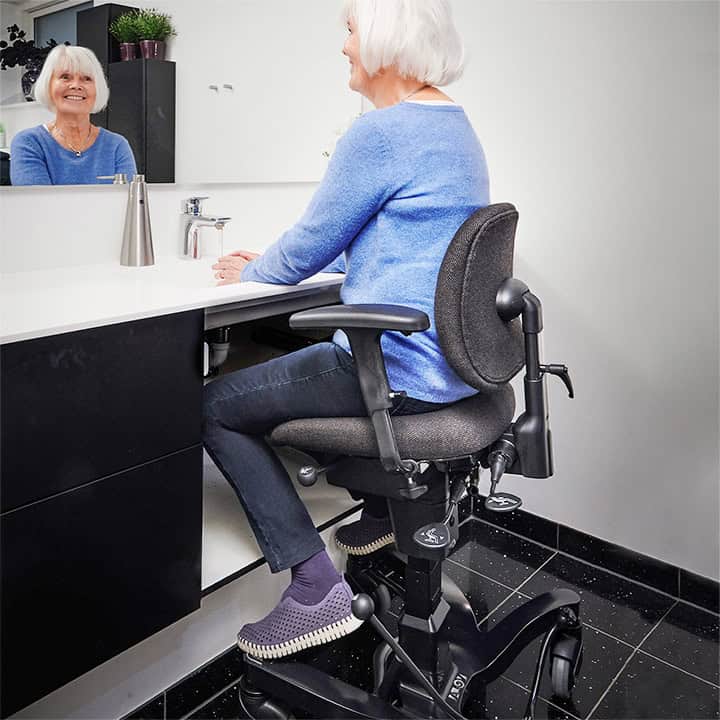
The challenges of accessing quality care within traditional nursing homes often include lack of personalized attention and issues related to mobility and autonomy. An increasing number of older adults seek solutions that allow them to remain independent at home, where they’re surrounded by familiar comforts. One promising solution is the integration of innovative assistive aids like the VELA Independence Chair. The VELA chair is a medically approved mobility chair tailored for home use, offering enhanced safety, freedom of movement, and support for daily activities such as cooking, dressing, or transferring. This not only promotes self-reliance but also eases the burden on informal caregivers by reducing physical strain and increasing the individual’s ability to perform routines independently.
Modern assistive devices increasingly prioritize ergonomic and inclusive design, as well as AI integration, with greater focus on seamless user experience, intuitive controls, and compatibility with smart home technology. Innovations such as smart wheelchair add-ons, autonomous navigation, and attachments like WheelMove, MaaS-Bridge for transport, and SEERU sensors, support inclusive and adaptive mobility for diverse needs. These advances extend accessibility and ease of use for seniors or those with dexterity impairments, helping maintain active lifestyles.[5][11][12][15]
A balanced perspective on in-home care in Melbourne
In-home nursing care offers a wide range of options blending government-supported packages and private initiatives. Traditional nursing homes provide comprehensive care facilities; however, many individuals and families find that the personalized nature and comfort of in-home care often exceed what is typically offered in institutional settings. Innovations, including VELA chairs, further enhance the everyday lives of seniors.
The most advanced in-home care services now emphasize technology-driven solutions (including AI wearables, autonomous smart mobility aids, and remote health monitoring), individualized and holistic service plans covering physical and mental wellbeing, and flexible delivery models to address the sector’s evolving workforce and regulatory landscape. Growing adoption of private equity investment, immigrant workforce support, and inclusive mobility and telehealth integration are also shaping best practice in Melbourne and across Australia.[3][5][12][8][13][14][15]
In conclusion, as families evaluate care options, balancing immediate needs with long-term considerations is crucial. The tailored nature of in-home services often presents a compelling alternative to traditional care, ensuring that the selected approach meets the unique needs of aging family members while providing peace of mind for their loved ones.
References
- Department of Health and Aged Care, Australia – Aged Care Funding Information. https://www.health.gov.au
- Gen Aged Care Data – Government Home Care Packages. https://www.gen-agedcaredata.gov.au
- Market.us Media – Home Healthcare Spending Statistics. https://media.market.us/home-healthcare-statistics/
- IBISWorld – Aged Care Residential Services Report. https://www.ibisworld.com/australia/industry/aged-care-residential-services/5531/
- AlayaCare. “Home care trends in 2025.” https://alayacare.com/en-au/blog/home-care-trends-2025/
- AlayaCare. “Residential care trends in 2025.” https://alayacare.com/en-au/blog/residential-care-trends-2025/
- Health n Home. “The top 10 health and home care trends in 2025.” https://www.healthnhome.com.au/blog/the-top-10-health-and-home-care-trends-in-2025-what-you-need-to-know
- Vital Home Health. “The future of in-home aged care services in Australia.” https://vitalhomehealth.com.au/the-future-of-in-home-aged-care-services-in-australia/
- McArthur. “Your career, reimagined: key healthcare trends shaping nursing careers in 2025.” https://www.mcarthur.com.au/blog/your-career-reimagined-key-healthcare-trends-shaping-nursing-careers-in-2025/
- Health n Home. “How AI and technology are transforming home health care in 2025.” https://www.healthnhome.com.au/blog/how-ai-and-technology-are-transforming-home-health-care-in-2025
- BSN Australia. “The future of aged care nursing: 2025 trends and innovations.” https://bsnaustralia.com.au/the-future-of-aged-care-nursing-2025-trends-and-innovations/
- Enkindle. “Home care provider outlook report 2025 (PDF).” https://enkindle.com.au/wp-content/uploads/2025/06/Home-Care-Outlook-Survey-Report-2025.pdf
- AlayaCare. “Challenges and opportunities in home and residential care in 2025.” https://alayacare.com/en-au/blog/challenges-opportunities-home-and-residential-care-2025
- Advanced Nursing Care. “Elder care in 2026 – trends to watch.” https://advancednursing.care/aging-in-place-as-a-family/elder-care-in-2026-trends-to-watch/
- KPMG Australia Aged Care Sector Analysis 2025. https://kpmg.com/au/en/insights/industry/aged-care-market-analysis.html
- Mobility Management. “CES 2026 Assistive Tech Exhibitors to Watch.” https://mobilitymgmt.com/ces-2026-4-assistive-technology-exhibitors-to-watch/