

Updated September 2025: We have updated the article to reflect the transformative impact of AI-powered technology and advanced wearables in in-home skilled nursing care, recent Medicare policy proposals to expand coverage, the latest innovations in ergonomic and assistive mobility devices, and ongoing workforce and operational challenges. Emphasis is placed on personalized, culturally tailored care and the integration of smart home modifications for improved independence and safety.
A Comprehensive Guide to In-Home Skilled Nursing Care
In recent years, there has been a significant shift towards in-home skilled nursing care as many patients prefer receiving medical care in the familiar, comfortable setting of their own homes. This trend aligns with the increasing national average occupancy rate for skilled nursing facilities, which was approximately 84.5% in Q3 2024, as reported by the National Investment Center for Seniors Housing & Care. This reflects a growing interest in home-based services, which are often more personalized and convenient. According to Medicare.gov, Medicare covers eligible home health services, including skilled nursing care, emphasizing this evolving preference.
What Is In-Home Skilled Nursing Care?
In-home skilled nursing care involves professional medical services provided within a patient’s home by licensed healthcare professionals. These skilled services are designed to manage chronic conditions, assist in recovery from surgery, or provide palliative care. According to the VNA Health Group, skilled nurses perform tasks such as wound care, IV therapy, catheter care, and monitor vital signs. Caregivers are usually registered nurses or licensed practical nurses, ensuring high standards of care tailored to various medical conditions.
Recent years have brought a notable integration of AI-powered platforms and advanced wearables into in-home care. These technologies remotely monitor vital signs, movement, medication adherence, and sleep patterns, allowing for real-time responses and adjustments to care plans. AI also supports caregiver scheduling and the customization of care, streamlining operations and enhancing patient safety and comfort.[1] [2]
To illustrate, consider Jane, a 68-year-old recovering from hip surgery. Her skilled nurse visits her home thrice weekly, assisting with medication management and physical therapy exercises, facilitating gradual and safe recovery within the comfort of her own living room.
Benefits of Skilled Nursing Care at Home
The benefits of receiving skilled nursing care at home are numerous. Primarily, it affords patients greater independence, facilitating recovery while reducing hospitalizations and promoting continuity of care. As highlighted by BrightStar Care, personalized care plans can be quickly adapted to changing patient needs, offering bespoke solutions that maximize comfort and efficacy. Moreover, a study from Nevada State College underscores the role of skilled nursing in improving patient outcomes and decreasing readmissions.
Today’s home-based nursing increasingly leverages AI technology and data from wearables to create highly individualized and culturally tailored care plans. These plans consider each patient’s medical history, lifestyle, and cultural preferences, and flexible scheduling allows agencies to mix medical services with social support, fostering holistic well-being.[1]
Patients recovering from conditions like heart failure may avoid readmission by receiving vital sign monitoring and nutritional guidance at home, ensuring prompt intervention if complications arise. This level of care also allows patients like Tom, who manages diabetes, to receive education on maintaining blood glucose levels in a manner that suits his lifestyle.
How to Qualify and Pay for In-Home Skilled Nursing
Medicare and insurance coverage for in-home skilled nursing is typically available for patients who meet specific eligibility requirements. According to Medicare.gov, Medicare covers skilled nursing care, therapy services, and certain medical supplies when prescribed by a physician. A key benefit is the comparatively lower cost structure of home-based care versus facility-based care, with the latter often incurring higher costs. For the most current information on payment updates, refer to the CMS industry reports.
In 2025, a major Medicare expansion proposal aims to significantly broaden coverage for in-home senior care, including home modifications and compensation for caregivers.[5] If enacted, this could reduce the burden on family caregivers, increase accessibility, and decrease skilled nursing facility admissions, with estimated cost savings for Medicare.[4] Agencies integrating advanced technology and high-quality standards may benefit from future financial incentives.
Comparing In-Home Skilled Nursing vs. Nursing Home Care
While in-home care provides a personalized approach to healthcare in a familiar environment, traditional nursing homes offer round-the-clock medical care with access to specialized facilities. According to insights from Ultimate Care NY, in-home care might be more suitable for individuals who require less intensive supervision. For those needing extensive care and social interaction, a nursing home may be the better choice. The VNA Health Group emphasizes that choosing the right care depends on individual needs and circumstances.
Integration of AI and digital monitoring tools is now standard in sophisticated home nursing services, closing the gap in safety and oversight that previously separated home care from nursing homes. This shift is making in-home skilled nursing a viable alternative for more complex conditions.[2]
For example, Ellen, who has advanced Parkinson’s, finds the social structure and comprehensive care at a nursing home essential. In contrast, her friend Mary, with early-stage Parkinson’s, thrives with the one-on-one attention that in-home skilled nursing affords.
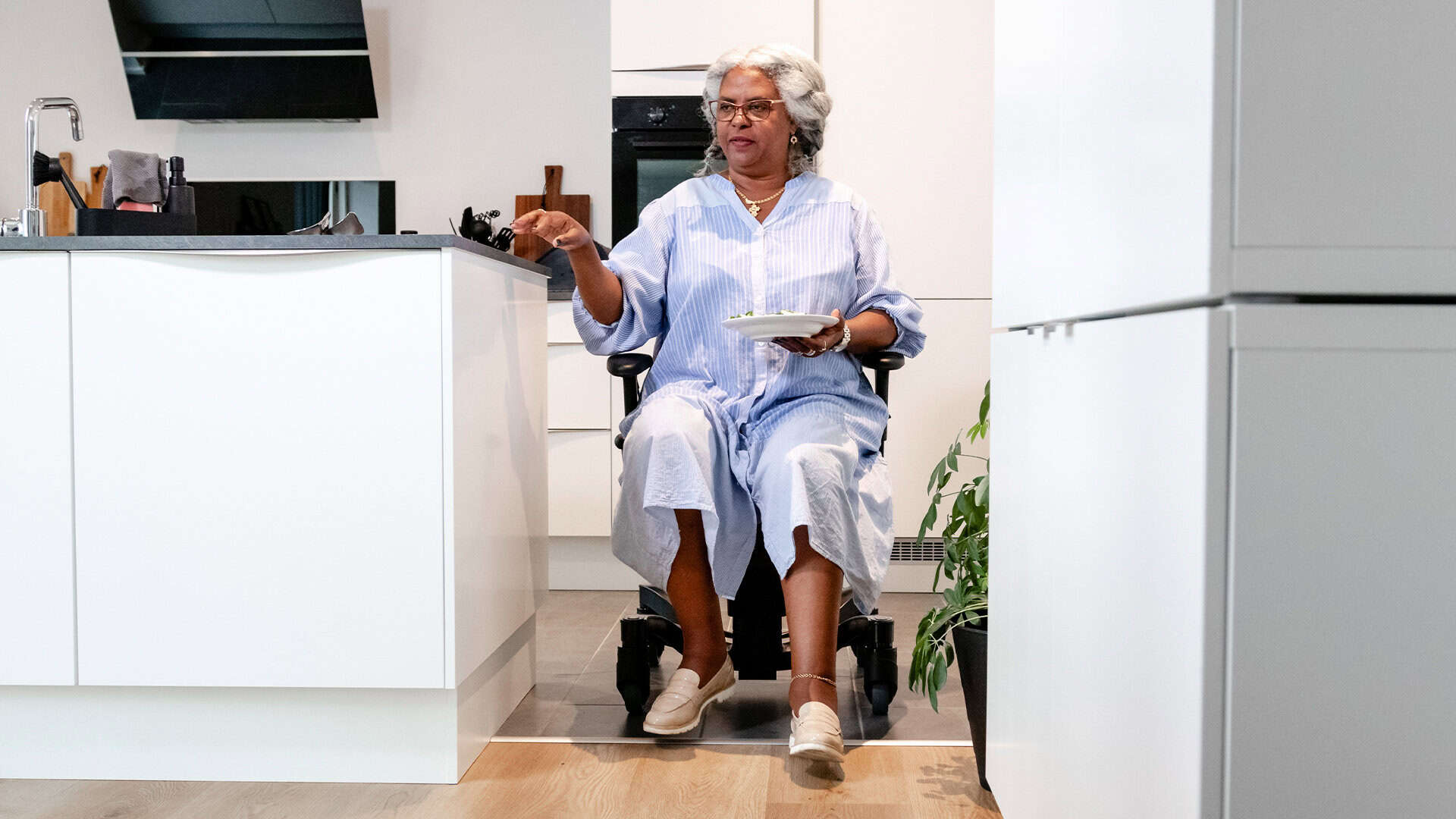
For individuals and families concerned about the potential drawbacks of nursing homes, such as limited personal space and high patient-to-staff ratios, maintaining independence at home is crucial. Here, solutions like the VELA Independence Chair offer a viable option. Designed specifically for home use, these medically approved mobility chairs enhance safety, provide freedom of movement while seated, and support daily activities such as cooking, dressing, and transferring. By reducing the physical burden on caregivers, these chairs facilitate a more independent and comfortable lifestyle for older adults in their own homes.
Enhancing the In-Home Care Environment
Supporting safety and independence, assistive devices play a critical role in effective in-home care. Chairs from VELA enhance mobility and provide ergonomic benefits essential for both patients and caregivers. Their design allows for safer and more comfortable participation in daily activities. Recent innovations include sensor-equipped wheelchairs and AI-enabled mobility aids that provide tailored feedback and adjust to user needs. Developments in ergonomic and smart assistive devices continue to emphasize inclusivity and rehabilitation in the home environment, supporting independence with advanced technology integration.[3] For options that aid mobility, see mobility chairs for home care.
How Mobility Solutions Like VELA Make a Difference
Staying independent at home is increasingly vital for many seniors. VELA Chairs are an example of a well-designed solution that helps older adults remain in their homes longer. These chairs provide essential features like a central brake for added safety, electric height adjustability, and ease of movement while seated, significantly aiding everyday activities such as cooking, cleaning, and relaxing. By minimizing the physical strain often involved in daily tasks, these chairs can delay the need for nursing home care, promoting a life of dignity and freedom. The comfort and security provided by VELA Chairs ensure that seniors can maintain high levels of independence, even when faced with mobility challenges—all while reducing caregiver burden. While VELA is a proven option, it is one of several solutions available to support aging in place effectively. For seniors looking to enhance their living spaces, supportive chairs for seniors at home offer additional insights into practical seating choices.
Understanding Workforce and Operational Challenges
Despite technological and policy advances, staffing shortages and operational efficiency remain persistent concerns in the skilled nursing sector.[4] [6] Efficient use of AI technology is crucial for reducing caregiver workload and maintaining high care quality in the face of ongoing workforce shortages.
Sources
- Allied Home Health Houston. “Top Home Care Trends 2025: What Families Need to Know.” [1]
- Family & Nursing Care. “Top 5 Home Care Trends of 2025.” [2]
- All Seniors Foundation. “Home Care Services for Seniors | 2025.” [3]
- National Investment Center for Seniors Housing & Care (NIC). “Skilled Nursing Faces Opportunities and Challenges in 2025.” [4]
- NCHStats. “10 Must-Know U.S. Home Care Industry Stats for 2025.” [5]
- Skilled Nursing News. “Top Skilled Nursing Trends for 2025.” [6]