

Updated February 2026: We have updated the article to include the latest developments in assistive technology such as AI-powered exoskeletons, smart autonomous wheelchairs with pressure-monitoring sensors, voice-controlled mobility aids, all-terrain power chairs, and wheelchair attachments for extended range. These innovations are now making assisted living communities more accessible for those with severe mobility challenges, delaying the need for nursing home care and supporting greater independence. The article also references current market trends, rehabilitation tech advancements, and emerging policy directions toward inclusive mobility and universal accessibility.
Is Assisted Living a Nursing Home?
When families delve into senior care options, a common question arises: “Is assisted living a nursing home?” Understanding the distinction between these two is crucial as the demand for senior care continues to rise. According to National Institute on Aging (NIA), the primary difference lies in the level of care: assisted living offers help with daily care, whereas nursing homes provide extensive medical and personal care. As more seniors and their families seek clarity, understanding these terms becomes increasingly important.
Understanding Assisted Living
Assisted living facilities are tailored for seniors who need assistance with daily activities but still desire a certain degree of independence. These communities offer a blend of support and autonomy. Residents generally reside in private or semi-private apartments and enjoy amenities like dining services, transportation, and social activities. According to A Place for Mom, these communities cater to individuals who are active yet require support with everyday tasks.
Regulation and licensing of assisted living facilities vary by state, but they adhere to standards ensuring safety and well-being while promoting independence. Residents often share stories of a vibrant community atmosphere, highlighting the role of social interaction in fostering a sense of belonging.
Modern assisted living facilities are rapidly integrating advanced assistive technologies, including AI-powered exoskeletons, smart wheelchairs with autonomous navigation and pressure-monitoring sensors, voice-controlled mobility aids, and wheelchair attachments like WheelMove for extended range. Innovations such as the LUCI add-on and MaaS-Bridge for accessible mobility-as-a-service further promote independence and support daily activities, making apartment-style living feasible even for residents with significant mobility limitations. These technologies also enable assisted living communities to better accommodate those with paralysis or complex physical disabilities, reducing reliance on nursing home-level care. Inclusive ergonomic design and universal accessibility remain central, allowing spaces and amenities to be safely used by a wide range of individuals.[2][4][14][6][2]
Exploring Nursing Homes
Nursing homes, or skilled nursing facilities, cater to seniors needing more intensive medical and personal care than what assisted living can provide. These facilities ensure 24-hour supervision and medical care, addressing residents’ health needs. According to Sunrise Senior Living, nursing homes deliver services including rehabilitation, physical therapy, and comprehensive medical care.
The staffing in nursing homes is more intensive compared to assisted living, with nursing homes focusing on individuals with significant health concerns. Staff testimonials frequently express a strong commitment to addressing complex health needs and ensuring residents receive necessary medical assistance.
Recent advances in nursing homes include wearable sensor technologies for continuous health monitoring, integration of brain-computer interface prosthetics, use of tele-rehabilitation platforms, and AI-driven mobility solutions. Rehabilitation technology such as AI spinal bridges and SEERU traffic-awareness systems also support more active engagement and safety for residents navigating complex environments, both within facilities and in mixed public spaces. These developments are raising the standard of clinical care, improving daily living and communication support for residents with severe disabilities.[2][4][6]
Comparing Assisted Living and Nursing Homes
While both assisted living facilities and nursing homes provide essential services, important distinctions exist between them.
- Levels of Care and Independence: Assisted living supports a more independent lifestyle. In contrast, nursing homes concentrate on comprehensive medical care. However, new assistive technologies such as autonomous wheelchairs, smart prosthetics, and AI exoskeletons are enabling even those with severe mobility impairments to maintain higher independence within assisted living—blurring lines between care settings.[4][6]
- Medical Support: Nursing homes offer advanced medical care and extensive supervision. Assisted living focuses on support for daily activities without major medical interventions. With increased adoption of AI-powered monitoring and navigation systems, safety and clinical oversight are also improving in assisted living settings.
- Cost Implications: According to Medicare.gov, Medicare usually does not cover assisted living but might cover short-term skilled nursing care.
- Social and Lifestyle Offerings: Assisted living emphasizes social activities, while nursing homes may provide recreational therapy alongside medical care.
- Technology and Accessibility: Both settings increasingly feature AI-powered mobility devices, smart pressure sensors to reduce pressure sores, all-terrain power chairs, and digital assistants. Devices such as WheelMove attachments and the XSTO X12 stair-climbing chair increase accessibility, while policy initiatives (e.g., MaaS-Bridge for accessible transport) reflect a broader commitment to universal access and inclusion. These trends are supported by significant market growth, with mobility aids projected to reach a 34% share by 2025.[4][14][6][8]
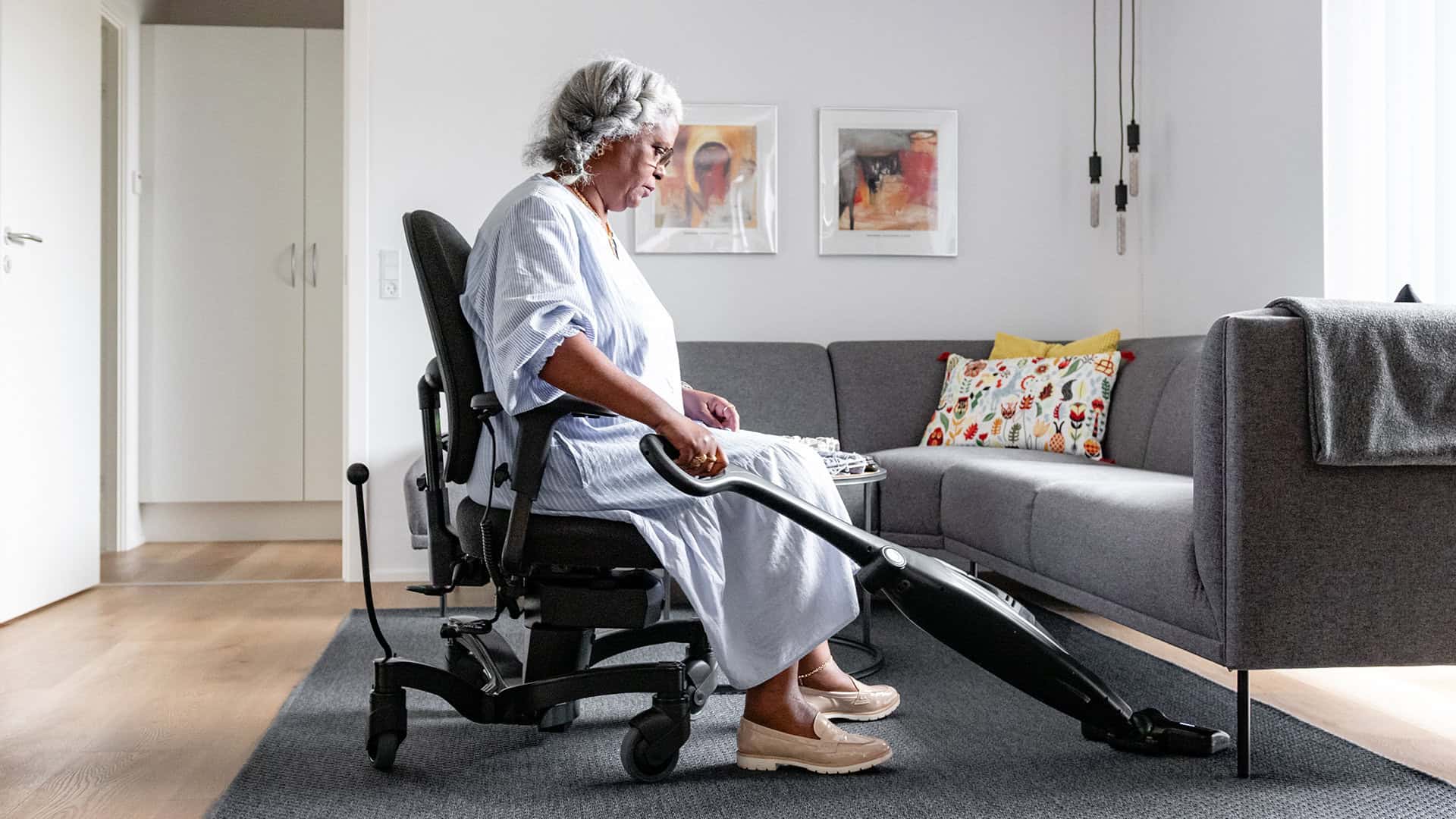
For seniors aiming to maintain independence, solutions like the VELA Independence Chair can be invaluable. The VELA Chair is a medically approved mobility chair designed to enhance safety and facilitate freedom of movement within the home. It provides essential support for daily activities such as cooking, dressing, and transferring, reducing the physical demand on informal caregivers. By offering enhanced mobility and stability, the VELA Chair supports seniors in remaining independent in their homes longer and poses an effective alternative to transitioning to nursing homes. For more details, you can explore mobility solutions for older adults at home.
Making the Right Choice for Senior Care
Selecting between assisted living and a nursing home should be based on individual needs, health conditions, and personal preferences. Considerations include the required care level, budget, and desired lifestyle. The decision often involves evaluating health complexity versus independence, as noted by HumanGood.
Families navigating this decision can benefit from a checklist assessing health status, independence levels, and financial resources. Expert guidance from senior care professionals can also provide valuable insights for making an informed choice.
Staying informed about the latest global standards and accessibility policy developments is also increasingly important. Guidance from organizations like the World Health Organization highlights the growing focus on universal access and the integration of assistive technology in both policy and daily care as populations age. These directions influence both the expectations families should have and the range of available support.[12][6]
Navigating the Choices in Senior Living
In determining whether assisted living resembles a nursing home, it’s key to recognize their distinct roles in senior care. Assisted living emphasizes independence with moderate support, while nursing homes offer extensive medical care and supervision. The appropriateness of each option is largely determined by individual senior needs and circumstances.
Ultimately, both nursing homes and assisted living facilities offer valuable senior care pathways, catering to various levels of need and independence. Increasingly, both settings are shaped by rapid advances in assistive technology—including AI-driven exoskeletons, smart wheelchairs, and digital support systems—modern rehabilitation tech, and inclusive design. Trends such as the adoption of autonomous mobility and voice-controlled aids, as well as market growth in mobility solutions, are collectively improving safety, independence, and resident satisfaction.[4][2][14][6][8]
Reducing Caregiver Burden Through Smart Seating
The VELA Independence Chair is a multifunctional mobility solution that significantly enhances daily life for seniors choosing to age at home. By providing a central brake for stability, electric height adjustability, and seamless movement while seated, the chair addresses key challenges discussed earlier, such as safety and ease of transfers. These features collectively work to maintain seniors’ independence, potentially delaying the transition to nursing facilities. Life with a VELA Chair means seniors can perform everyday activities like cooking or cleaning with greater ease and dignity, bolstering their safety and preserving valuable energy. Assistance devices that enable seniors to live at home present practical options that enhance autonomy without completely relying on caregiver support, reminding us that while VELA chairs are not the sole solution, they provide a reliable and proven option.
References:
- World Health Organization: Assistive technology fact sheet[12]
- Keyway Medical: Innovations in mobility aids – A look at the latest technologies[2]
- Think Beyond the Chair: The best assistive tech gadgets in 2025 – Enhancing independence through innovation[4]
- Envision Blog: Future assistive technology – From standalone apps to AI assistants[6]
- Equal Accessibility LLC: Innovations in assistive technology for inclusive living[14]
- CES 2026: 4 Assistive Technology Exhibitors to Watch (Mobility Management)[6]
- Assistive Technology for Physical Disabilities (Accessibility Innovations)[2]
- Exciting Assistive Technology for People with Disabilities (AbilityMT)[4]
- Assistive Technology Statistics and Facts (2026) (Market.us)[8]