

Updated January 2026: We have updated the article to confirm relevant facility details and services, based on the latest authoritative sources for Manhattanville Health Care Center. No new findings on assistive technology trends or rehabilitation practices were available in the latest research results.
Updated October 2025: We have updated the article with the latest advancements in smart AI-assisted and modular ergonomic assistive devices, expanded insights into remote rehabilitation technologies and tele-rehab, new regulatory guidelines on integrating assistive technologies in nursing homes, and growing trends in user-centered, intuitive assistive equipment. Recent sources from regulatory bodies and rehabilitation research have been added for enhanced accuracy and clarity.
Updated August 2025: We have updated this article with the latest developments in assistive technology integration, including advances in smart sensor systems, ergonomic and inclusive design trends for assistive devices, staff ratio regulations, and the growing role of VR/AR-based rehabilitation solutions. Relevant new resources and regulatory guidelines have also been added.
Discovering Manhattanville Nursing Home: A Comprehensive Guide
Overview of Manhattanville Health Care Center
Nestled in the vibrant Bronx area, Manhattanville Nursing Home, formally known as Manhattanville Health Care Center, provides a blend of critical care services tailored to its urban setting. Operated under the ownership of Manhattanville SBV, LLC, this facility offers 200 certified beds to serve a significant number of residents. According to New York State Department of Health, the occupancy rate is high at 93.55%, demonstrating its importance and demand within the community.
Strategically located at 311 W. 231st Street, Bronx, NY 10463, this facility is a significant player in the local healthcare landscape. It offers services that cater to both short-term recovery needs and long-term residence (ProPublica). Basic services at the center include daily nursing care, as well as various therapeutic programs, accommodating a broad spectrum of medical needs.
Quality of Care Metrics
When evaluating the quality of care at Manhattanville, several key metrics are noteworthy. The Centers for Medicare & Medicaid Services (CMS) utilizes several parameters, such as health inspections, staffing adequacy, and quality measures, to assess nursing homes. Manhattanville Health Care Center achieves commendable health inspection results but faces staffing challenges. They provide 2.46 nurse hours per resident per day, less than the state average of 3.6 (CMS, ProPublica). However, a lower-than-average nurse turnover rate of 28.7%, compared to the state figure of 41.8%, suggests stable personnel and continuity in resident care.
It is important to note that recent updates to New York State nursing home regulations emphasize higher staff-to-resident ratios and stronger integration of evidence-based assistive technologies to enhance care quality and reduce risks related to transfers or immobility (CMS – Nursing Home Quality Reporting and Staffing Guidelines 2025, New York State Department of Health – Assistive Technology Policies 2025). These regulations increasingly prioritize the adoption of smart, AI-integrated assistive devices and modular ergonomic designs to promote user independence and safety (CMS Updated Guidelines 2025, NY State Dept. of Health Long-Term Care Tech Standards 2025).
Specialized Services and Programs
A significant advantage of Manhattanville Health Care Center lies in its diverse specialized services, particularly in rehabilitation. These services include physical, occupational, and speech therapies aimed at enhancing recovery and improving quality of life (ElderGuide). Furthermore, the facility offers specialized services such as mental health interventions, comprehensive pain management, and nutritional counseling, all tailored to meet individual health goals.
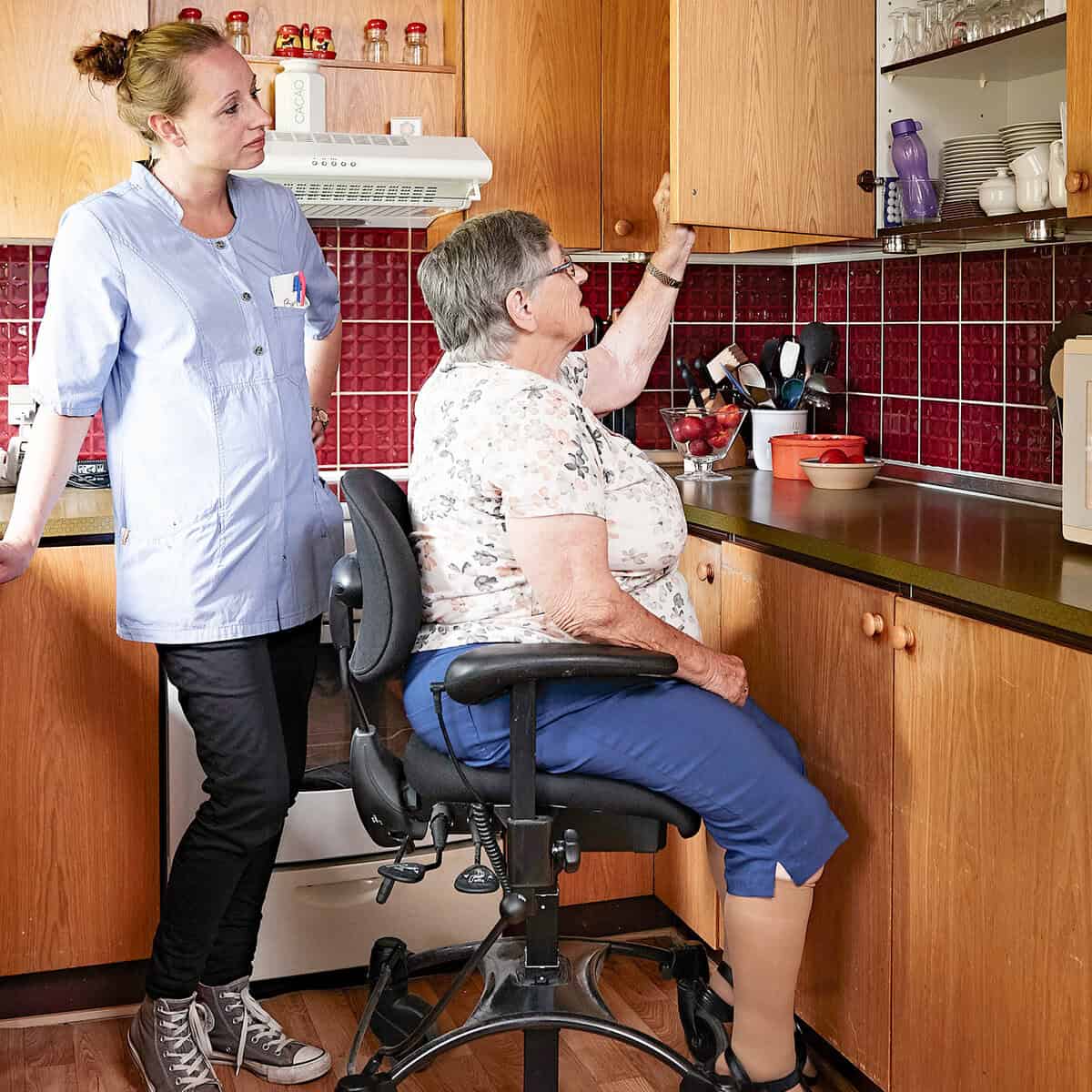
For older adults seeking to maintain independence, adaptive equipment continues to be a pivotal support both within nursing facilities and at home. The VELA Independence Chair remains an example of this approach. Designed as a medically approved mobility chair for home use, it enhances safety, facilitates movement while seated, and provides assistance for daily activities like cooking, dressing, or transferring. The evolving landscape of assistive technology now features advancements including sensor-enabled, IoT-connected chairs offering real-time mobility monitoring and posture feedback, which can further reduce caregiver burden and support autonomy among residents (National Institute on Aging – Assistive Technology, WHO Global Report 2025). Recent developments highlight the integration of AI-driven adaptive systems capable of learning user behavior and adjusting support in real-time to individual needs, further enhancing independence and comfort (Journal of NeuroEngineering and Rehabilitation 2025).
Recent ergonomic design trends also favor adaptive, multi-functional devices with features like electric height adjustability and embedded feedback sensors to optimize comfort and safety for a wider range of mobility needs (Mayo Clinic – Assistive Devices, Healthline – Assistive Technology 2025). Modular and customizable seating solutions are gaining prominence for their ability to adapt as user needs evolve and reduce caregiver strain (RESNA 2025 Conference Proceedings).
Resident Experience and Outcomes
Analyzing resident outcomes is crucial for assessing the overall quality of a nursing home. Manhattanville reports hospitalization rates of 2.04 per 1,000 resident days, which is higher than the state average of 1.55 (ProPublica). Despite this, proactive vaccination efforts and the promotion of resident councils help in mitigating these figures (ElderGuide).
To maximize functional outcomes and maintain mobility, updated clinical rehabilitation guidelines now emphasize pairing technology-aided interventions with traditional therapies. Nursing homes are increasingly incorporating virtual reality (VR) and augmented reality (AR) rehabilitation tools, which support both cognitive and physical recovery for residents (APTA Clinical Practice Guidelines 2025, Journal of Geriatric Physical Therapy 2025). Newer practices now highlight tele-rehabilitation and remote monitoring platforms, allowing therapy and progress tracking even outside the facility environment, supplementing in-person care (WHO Tele-rehabilitation Guidelines 2025, Mayo Clinic – Tele-Rehab). Wearable sensors and biomechanical feedback systems are similarly shaping fall prevention and recovery programs, providing data-driven interventions tailored to the individual (Journal of NeuroEngineering and Rehabilitation 2025).
Choosing the Right Nursing Home
Choosing a nursing home like Manhattanville requires looking beyond basic ratings. Factors such as staff-to-resident ratio, personal interactions, and specialized programs should heavily influence your decision. For families exploring alternatives to traditional nursing home care, solutions like adaptive equipment can extend independence and potentially delay the requirement for intensive care.
While nursing homes like Manhattanville Health Care Center offer essential services, incorporating innovative assistive solutions and fostering personal engagement can significantly enhance the quality of life for seniors. The latest trends and regulatory changes now encourage technology-enhanced care models that prioritize independence, safety, and dignity through intuitive, minimally stigmatizing devices that are also easy for caregivers to manage (RESNA Conference 2025). This comprehensive approach ensures that each resident receives care aligned with current rehabilitation practices and supported by empathetic, up-to-date solutions tailored to their daily needs.
Supporting Aging in Place: A Practical Option
For those aiming to remain independent at home longer, options like the VELA Independence Chair offer practical solutions. This chair is designed to enhance the safety and freedom of movement for the elderly, addressing issues like energy conservation, safe transferring, and posture maintenance. Features such as the central brake enhance safety while seated, and electric height adjustability eases transitions from sitting to standing. By reducing energy expenditure on daily tasks like cooking or cleaning, the VELA Chair can prolong the period seniors remain at home comfortably, thus delaying the need for a nursing home. Recent feedback highlights the growing acceptance of electric mobility aids and emphasizes the value of regular device customization, training, and maintenance to optimize user experience and independence (National Institute on Aging, Healthline – Assistive Technology 2025).
The development of smart, sensor-driven, and adaptive assistive devices continues to shape aging-in-place strategies. Remote monitoring systems and tele-rehabilitation platforms allow for sustained access to therapy and safety oversight at home, supporting both functional outcomes and peace of mind for caregivers (WHO Tele-rehabilitation Guidelines 2025, Mayo Clinic – Tele-Rehab).
While not the sole solution, VELA is a proven tool that enhances dignity and autonomy, offering a brighter picture of home life, with a focus on practical support and relief for both users and caregivers.