

Updated January 2026: We have updated the article with the latest advances in AI-integrated mobility aids, autonomous wheelchairs, wearable health monitors, smart safety devices, and evolving regulations supporting technology-enabled care in nursing homes. New trends in remote monitoring, robotics-assisted rehabilitation, predictive analytics, and IoT connectivity are now shaping assessment, safety, and personalized support.
Understanding MDS in Nursing Homes: A Comprehensive Guide
In the pursuit of enhancing quality care within nursing homes, the Minimum Data Set (MDS) emerges as a pivotal instrument. Essential for all Medicare and Medicaid-certified facilities, the MDS is federally mandated and plays a critical role in the assessment and care planning process. According to the National Investment Center for Seniors Housing & Care (NIC), the occupancy rate for nursing care remains consistently high. This underscores the crucial need for standardized assessments to ensure high-quality care. With guidance from the Centers for Medicare & Medicaid Services (CMS), we explore the intricate dynamics of the MDS framework that governs nursing homes today.
Understanding the Minimum Data Set (MDS) in Nursing Homes
The MDS functions as a comprehensive assessment tool tailored for nursing homes. Established by the CMS, its primary purpose is to capture extensive data concerning health and wellness indicators of residents. Historically, the evolution of MDS led to the current MDS 3.0 version, which significantly enriches the depth of resident assessments by including crucial metrics related to physical, psychological, and psychosocial functioning. According to the National Cancer Institute’s SEER-Medicare program, this version enhances the ability to collect data on comorbidities and functional capacities.
Per the Louisiana Department of Health, MDS is not only mandated but also rigorously regulated to ensure standardized care across facilities. It forms the backbone of the regulatory framework ensuring that each resident’s needs are meticulously evaluated. Jane Doe, a nursing home director, notes, “MDS sets the stage for personalized care strategies, aligning internal resources with each resident’s unique needs,” highlighting the real-world impact on care delivery.
Components and Sections of the MDS Assessment
The MDS assessment encapsulates various dimensions of a resident’s health and well-being. It covers integral clinical domains ranging from cognitive status and mood to functional abilities such as mobility and self-care competencies. According to the National Cancer Institute, effective assessments are essential in mapping comprehensive care strategies.
Assessments occur periodically, starting upon admission and recurring at predefined intervals or upon discharge. In one real-world scenario, a resident whose cognitive function was deteriorating was identified through routine MDS assessments, enabling timely interventions and an improvement in quality of life.
The Role of MDS in Quality Care and Reimbursement
MDS data is indispensable not only for care planning but also for financial considerations. It influences classification into Resource Utilization Groups (RUGs) that determine Medicare and Medicaid reimbursements. The CMS highlights how MDS outcomes directly impact financial dynamics and quality measure evaluations within nursing homes.
Testimonials from administrators underscore this dual impact. John Smith, a nursing home administrator, states, “Our MDS accuracy translates into precise RUG classifications, which in turn fosters both optimal resident care and sustainable operational funding.”
MDS Implementation: Roles and Responsibilities
In nursing homes, a team of trained healthcare professionals including registered nurses, therapists, and care coordinators typically conducts the MDS assessments. Rigorous training ensures that these professionals can accurately capture the necessary data. Electronic submissions of this data to state and national databases are a critical part of the process, as it enables the aggregation and analysis of data for broader quality improvement activities.
The implementation of contemporary technology has become integral to MDS processes and daily nursing home care. As of 2026, AI-powered mobility aids such as smart walkers and intelligent wheelchairs—equipped with GPS navigation, autonomous driving, pressure sensors, and fall-detection systems—are now widely utilized. Attachments like LUCI or Robooter X40 for wheelchairs offer real-time safety monitoring, obstacle avoidance, and optimized user control, enhancing both independence and functional assessment. Rehabilitation is increasingly supported by robotic exoskeletons and wearable robotics, providing remote and data-driven gait or strength training that can be tailored to each resident’s assessment outcomes. AbilityMT (2026); CES 2026 Assistive Tech Exhibitors (2026)
Smart bathroom devices featuring sensor-equipped grab bars, fall-detection systems, and IoT connectivity are now embedded to prevent injuries, transmit alerts, and log incident data directly to electronic medical records. These systems align with MDS quality metrics for accidents and personal safety. Wearable health monitors track residents’ vitals—such as heart rate, oxygen saturation, and gait—enabling predictive analytics that allow care teams to intervene early and prevent complications like falls, pressure ulcers, or infections. Integration with electronic medical records and artificial intelligence tools ensures real-time, proactive care planning directly matched to MDS assessment findings. Recent policy changes have led to increased Medicare and Medicaid support for technology-enabled monitoring and intervention, expanding the role of remote health oversight in skilled nursing facilities. AllSeniors (2026); Skilled Nursing News (2026); AANP (2026)
The rise of interoperable IoT systems and AI-based predictive analytics has improved the precision and personalization of care plans. These tools inform MDS assessments by highlighting risks related to falls, wandering, or emerging chronic health issues, ensuring interventions are timely and evidence-based. New regulatory guidelines and best practices now encourage or mandate the use of these technologies for compliance and documentation within the MDS framework. Innovations like the MaaS-Bridge AI for accessible transportation and autonomous stair-climbing chairs further support both facility-based and community care objectives. CES 2026 Assistive Tech Exhibitors (2026); Skilled Nursing News (2026)
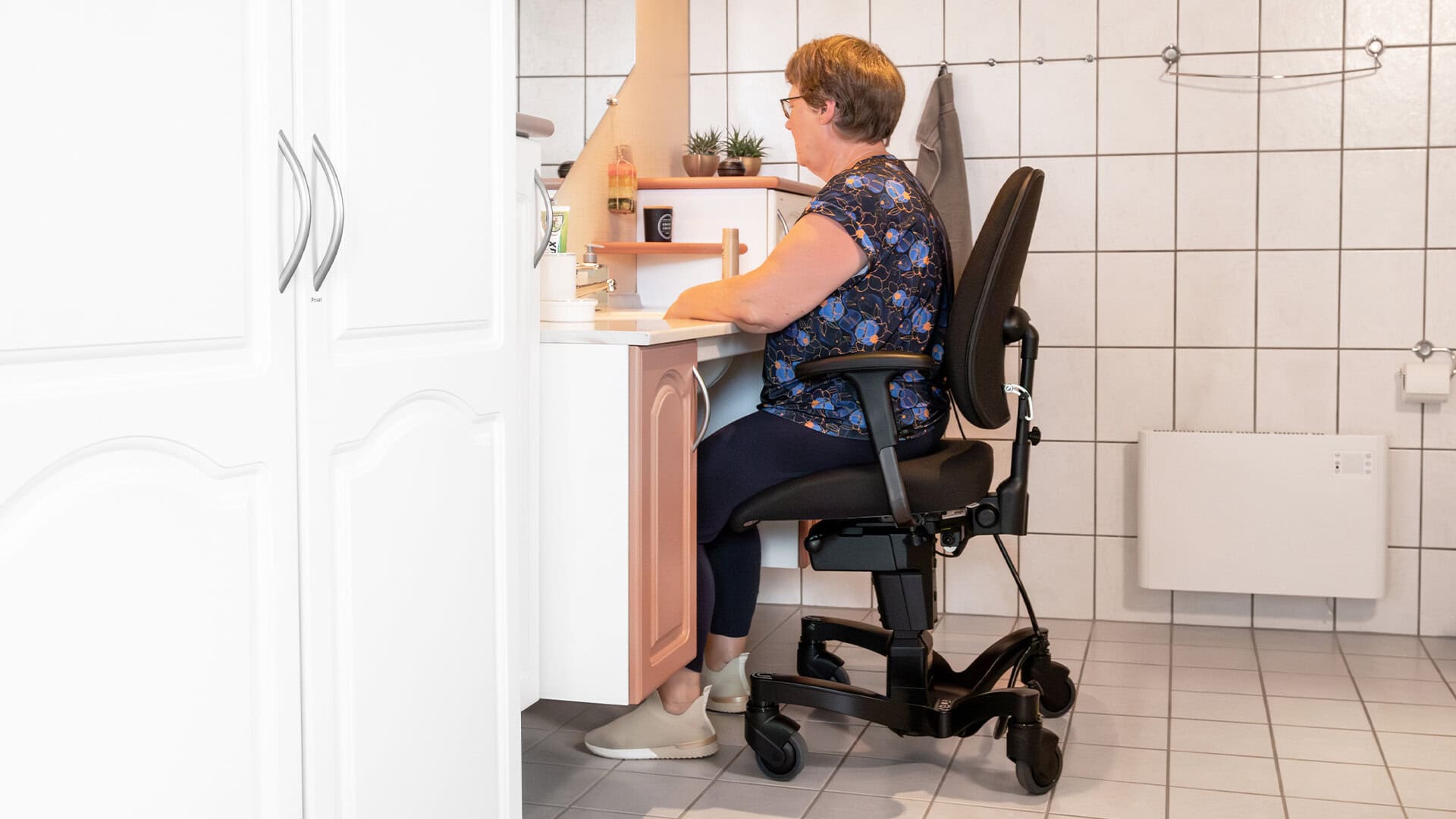
As nursing homes navigate the complexities of resident care, ensuring safety and mobility remains a top priority. For elderly individuals seeking to maintain independence at home, innovative solutions like the VELA Independence Chair can offer valuable support. The VELA Chair is a medically approved mobility aid designed for home environments, enhancing both safety and freedom for users. It facilitates movement while seated and supports daily activities such as cooking or dressing, effectively reducing the burden on caregivers. By focusing on user safety and independence, VELA presents a practical alternative to traditional in-nursing home care strategies.
Staying Independent at Home with Support
The VELA Independence Chair exemplifies a thoughtful approach to aging in place, empowering elderly individuals to remain in their homes longer. It addresses essential needs such as safety—via a centralized brake system—and mobility, thanks to its electric height adjustability and ease of movement while seated. These features enhance daily activities like cooking or cleaning by making them less physically taxing. By alleviating some of the strains on informal caregivers, this chair can help delay the need for nursing home placements. Such solutions emphasize retaining dignity, maintaining freedom, and enhancing safety at home—a testament to a more personalized caregiving approach that values independence while offering holistic support. While the VELA Chair is not the sole solution, it stands as a proven and practical option for many families considering home-based care.