

Updated January 2026: We have updated the article to include the latest developments in AI-integrated assistive technologies, including smart walkers, sensor-equipped grab bars, robotic exoskeletons, wearable monitors for fall detection and vital signs, and the growing integration of remote monitoring, personalized virtual rehabilitation, and smart home solutions in nursing home and home-based care. The article also reflects new policy trends and the enhanced role of technology in personalized care planning.
Understanding MDS in Nursing Homes
The Minimum Data Set (MDS) is a pivotal element in the landscape of nursing homes across the United States, ensuring both quality care and proper reimbursement mechanisms within Medicare- and Medicaid-certified facilities. At its core, MDS is a standardized assessment tool used to evaluate and manage the care of residents in nursing homes, impacting everything from resident well-being to institutional financial health.
What Is the Minimum Data Set (MDS) in Nursing Homes?
The MDS serves as a comprehensive data collection framework that aids in assessing the functional capabilities of nursing home residents and formulating individualized care plans. Developed in the late 1980s as part of the Omnibus Budget Reconciliation Act (OBRA), MDS has evolved to become a mandatory component of care in regulated facilities across the country. According to Centers for Medicare & Medicaid Services (CMS), “The MDS is used as a data collection instrument to classify Medicare residents into PDPM components and monitor the quality of care provided to nursing home residents.”
The intricacies of MDS lie in its regulatory requirements, which mandate regular assessments at both federal and state levels. These evaluations are critical for ensuring compliance with care standards and for capturing detailed information on residents’ health and care needs. It is important for families considering nursing homes to understand these requirements, as they directly relate to the quality of care their loved ones will receive.
How MDS Assessments Shape Quality of Care and Reimbursement
MDS assessments are integral to shaping both the quality of care and the financial infrastructure of nursing homes. These assessments are performed periodically to capture key health data and inform care strategies, ensuring that care plans are responsive to the evolving needs of residents. According to UCSF Pepper Center, “MDS assessments are performed on all residents of nursing homes in the United States that are eligible to receive funding from Medicare or Medicaid.”
One of the critical components of utilizing MDS data is its impact on Medicare and Medicaid reimbursement systems, such as the Patient-Driven Payment Model (PDPM) and the Skilled Nursing Facility Prospective Payment System (SNF PPS). These models rely heavily on accurate MDS data to determine payment rates, incentivizing high-quality care and resource efficiency. For example, a resident with complex medical needs might trigger a higher reimbursement rate, reflecting the increased resources required for their care.
The evolving technology landscape in nursing home care
In 2026, nursing home care is undergoing rapid transformation with the mainstream emergence of AI-integrated assistive and monitoring technologies. New solutions include smart walkers with built-in fall detection, sensor-equipped grab bars, robotic exoskeletons, and wearable monitors that continuously track vital signs and movement, supporting both mobility and safety in real time.[1][2][3][4][7] These tools enable predictive analytics that can identify changes in risk levels early, allowing staff to intervene proactively and reduce hospitalizations.
Remote monitoring via wearables and smart home sensors is now a mainstream part of care, providing real-time data to clinicians and caregivers through secure cloud platforms.[3] This integration not only helps prevent adverse events, such as falls or pressure ulcers, but also supports more personalized care planning. Nursing homes are increasingly leveraging AI-assisted platforms to coordinate hybrid or fully virtual rehabilitation programs with motion-tracking feedback, and to update individualized care plans based on objective activity and health data.[2] While the overall use of AI in nursing homes remains below 5%, the pace of adoption continues to rise as facilities pursue more effective, data-driven interventions for residents.[3]
Smart home integrations, such as voice-activated systems, connected lighting, and caregiver alert platforms, are supporting both aging in place and dementia care.[1][2] Personalized care planning now incorporates feedback from wearable and in-home sensors, allowing rapid adjustments and more effective interventions. There is also increased attention to mitigating infection and injury risk via antimicrobial mats, smart bathroom fixtures, and connected wound monitoring devices.
Robotic devices and exoskeletons, once considered experimental, are becoming part of standard care, particularly for residents requiring advanced mobility or recovery support.[1] Upscale technology environments, now often consumer-driven, combine high-touch and high-tech features to promote dignity, independence, and safety.
Policy changes such as the GUIDE dementia care model reinforce the shift toward proactive, tech-supported care through the next decade.[7] While technology is designed to support, not replace, clinical staff, these advancements contribute directly to lower infection rates, fewer injuries, and greater overall well-being for nursing home residents.[3]
The Role of MDS Coordinators in Nursing Homes
MDS Coordinators are key players in the execution of these assessments and the application of data within nursing homes. Tasked with ensuring the accuracy and timeliness of MDS submissions, these coordinators hold significant influence over care processes and resident outcomes. Research from the National Institutes of Health indicates that “Minimum Data Set (MDS) Coordinators’ relationship patterns influence nursing home care processes,” underscoring their role in promoting optimal resident care through effective communication and data management strategies.
A typical day for an MDS Coordinator might involve collaborating with nursing staff to gather data, attending interdisciplinary meetings to develop care plans, and monitoring compliance with regulatory standards. Their expertise ensures that each resident’s care is personalized and aligned with best practices. MDS Coordinators are also adapting to new tools and protocols for secure data management, and increasingly manage AI-powered systems, telemedicine platforms, and remote monitoring applications, as these technologies become embedded in routine care delivery.[6]
Common Questions About MDS and Nursing Home Standards
Questions surrounding the MDS and its implications are common among those seeking nursing home care. Understanding the role and frequency of MDS assessments, the responsibilities of care staff, and how MDS data affects nursing home ratings can significantly influence family decision-making. According to John Snow Labs, public reporting of MDS-based quality measures can serve as a valuable tool for families comparing nursing home options.
- What is the MDS used for in a nursing home?
The MDS collects comprehensive health information to guide care planning and impacts reimbursement. - How often are MDS assessments conducted?
Typically, MDS assessments occur quarterly, but can be more frequent, depending on care changes or significant health events. - Who completes the MDS in a facility?
Typically, a team of healthcare professionals, including nurses and MDS Coordinators, conducts the assessments.
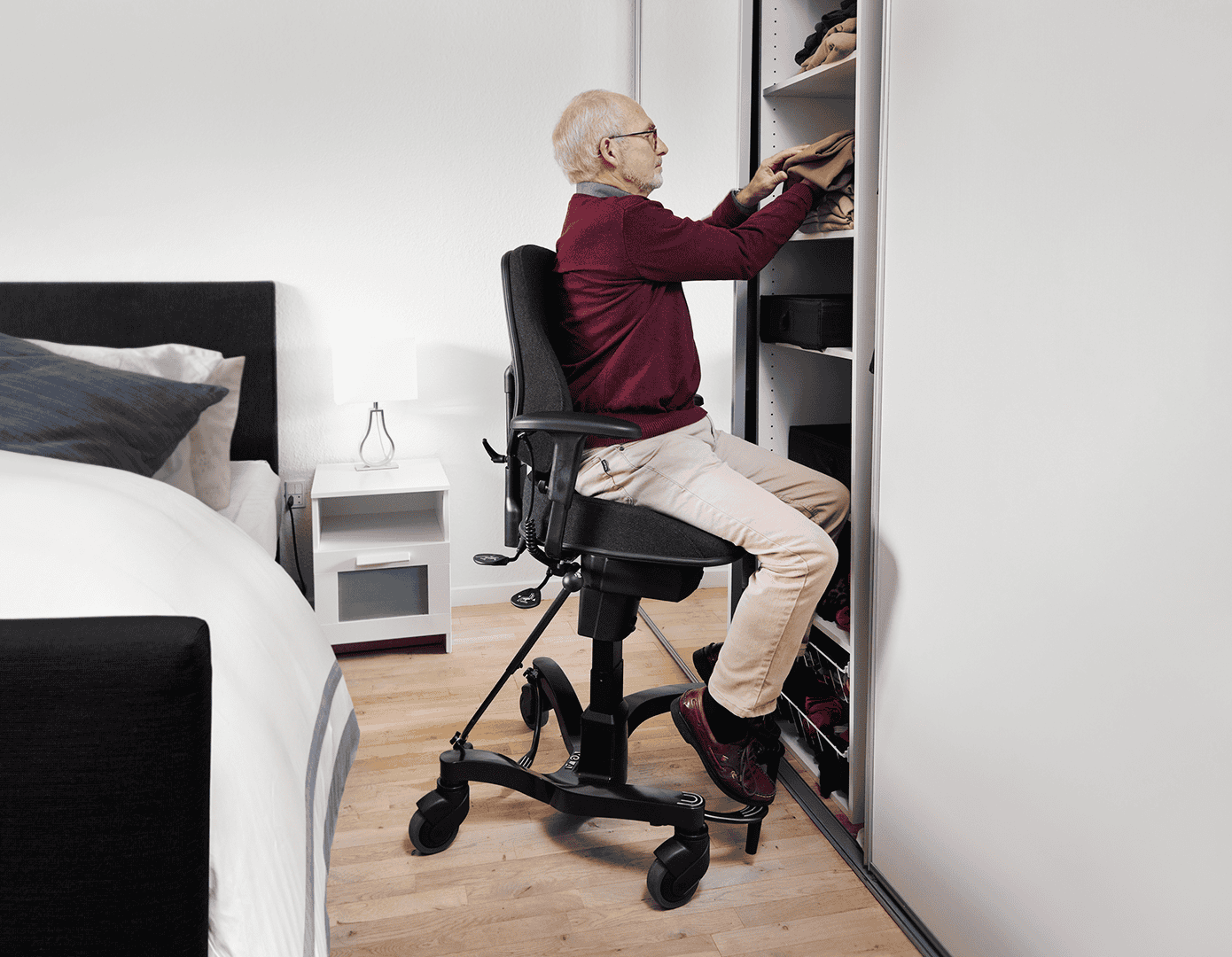
As the landscape of elder care evolves, nursing homes face the challenge of balancing safety and independence for their residents. Innovative solutions are entering the scene, aimed at supporting adults who prefer to maintain their independence within their own homes. The VELA Independence Chair stands out as a pivotal solution in this regard. Medically approved for home use, VELA chairs enhance safety and freedom of movement while seated, assisting with daily activities such as cooking, dressing, and transferring. These features reduce the physical demands on informal caregivers, facilitating a balanced care approach that aligns with individualized care plans derived from MDS assessments. Discover more about empowering seniors with solutions like Mobility Solutions for Home Care that prioritize independence and safety, fostering a supportive home environment.
Supporting Aging in Place: A Practical Option
Mobility solutions like the VELA Independence Chair can significantly impact an older adult’s ability to remain at home longer, offering an alternative to entering a nursing home prematurely. The chair’s central brake provides essential safety, while electric height adjustability and ease of movement while seated ensure freedom in daily activities, such as cooking, cleaning, or simply relaxing comfortably. These features not only enhance dignity and independence for seniors but also conserve energy and alleviate caregiver burden. Life with a VELA Chair means less effort required from caregivers to support loved ones, leading to fewer physical demands and stress. While not the only available solution, the VELA Chair represents a practical and proven means to support aging in place, ensuring that seniors can continue living in familiar environments with grace and ease. For more insights, explore how these chairs contribute to Reducing Fall Risks in Nursing Homes, highlighting their role in comprehensive care strategies.
References
- AllSeniors, “Top Home Medical Equipment for Senior Safety and Comfort in 2026” – comprehensive overview of smart walkers, sensor-based aids, and emerging AI-enabled home medical equipment for older adults (2026-01-17). https://allseniors.org/articles/top-home-medical-equipment-for-senior-safety-and-comfort-in-2026/
- AllSeniors, “Emerging Home Health Services for Seniors – Trends in Aging Care 2026” – detailed examination of AI, robotics, and virtual rehabilitation integration in home-based and facility care (2026-01-10). https://allseniors.org/articles/emerging-home-health-services-for-seniors-trends-in-aging-care-2026/
- Skilled Nursing News, “Top Trends That Will Shape the Skilled Nursing Sector in 2026” – analysis of the roles of AI, remote monitoring, policy changes, and technology adoption in skilled nursing (2026-01-19). https://skillednursingnews.com/2026/01/top-trends-that-will-shape-the-skilled-nursing-sector-in-2026/
- AANP, “Top Five Health Care Trends for 2026” – overview of AI integration in patient monitoring, fall prevention, and proactive care in long-term settings (2026-01-11). https://www.aanp.org/news-feed/top-five-health-care-trends-for-2026-how-new-technology-is-transforming-patient-care
- Senior Housing News, “HDG Execs on Trends Reshaping Senior Living in 2026” – insights into remote monitoring, personalized tech, and regulatory models enhancing dementia care (2026-01-16). https://seniorhousingnews.com/2026/01/16/hdg-execs-these-6-trends-could-reshape-senior-living-in-2026/
- Heisinger Bluffs, “The Future of Senior Living: Trends to Watch in 2025” – overview of technology trends, wellness-focused environments, and AI integration in senior living (2025-03-12). https://www.hbrhc.com/blog/the-future-of-senior-living-trends-to-watch
- Everything Medical Online, “The Latest Trends in Mobility Aid Technology for 2025” – focuses on AI-powered smart wheelchairs and assistive mobility device innovations (2025-05-30). https://everythingmedicalonline.com/blogs/news/the-latest-trends-in-mobility-aid-technology-for-2025
- UnitedHealthcare Community & State, “How Enabling Technology is Transforming Home-Based Care” – outlines smart home assistants, safety sensors, and remote support technologies (2025-08-11). https://uhccommunityandstate.com/content/blog-post/blogs/how-enabling-technology-is-transforming-home-based-care
- iHealthcare Analyst, “Geriatric Assistive Devices Market: Trends, Technologies & Outlook” – covers advances in ergonomic, adaptive, and 3D-printed mobility devices and biomaterials (2025-06-07). https://www.ihealthcareanalyst.com/geriatric-assistive-devices-trends-technologies-outlook/
- LetsEnvision, “What’s Next for 2025: The Future of Assistive Technology & AI” – analysis of AI assistants for accessibility and future assistive tech integration (2025-07-15). https://www.letsenvision.com/blog/future-assistive-technology
- Juniper Communities, “Senior Living Trends in 2025” – insights on person-centered, wellness-focused, and tech-enabled senior living environments (2025-08-10). https://junipercommunities.com/senior-living-trends-in-2025/
- Synchrony Florida, “The Future of Home Health Care: Trends to Watch in 2025” – overview of AI-enabled assistive technologies and smart home integrations for senior care (2025-04-10). https://synchronyfl.com/future-of-home-health-care-trends-2025
- ButterflyMX, “Senior Living Technology Trends 2025” – highlights AI, predictive analytics, telehealth, and remote monitoring usage in senior living communities (2025-07-11). https://www.butterflymx.com/blog/senior-living-technology-trends/
- MyCare Concierge, “How Technology will Transform Senior Care in 2025” – detailed discussion on telemedicine, robotics, and wearable health tech for older adults (2025-02-24). https://mycareconcierge.com/2025-technology-transform-senior-care
- CLA Connect, “Senior Living and Care: Four Key Drivers of Activity in 2025” – analysis of regulatory changes, tech adoption, and operational efficiency in senior living (2025-02-18). https://www.claconnect.com/insights/articles/2025-senior-living-and-care-activity-drivers
- Next Market Services, “Disabled and Elderly Assistive Device Market 2025–2030″ – report on AI-powered and cost-effective assistive devices, including robotics and IoT solutions (2025-05-20). https://www.nextmarketservices.com/disabled-elderly-assistive-device-market-2025-2030