

Updated January 2026: We have updated the article with the latest trends from early 2026, including smart mobility devices with integrated fall detection and emergency response, AI-driven predictive analytics for proactive health monitoring, hospital-at-home care models, connected digital equipment platforms, and operational AI tools supporting both residents and staff in skilled nursing. The article now reflects these advances in technology-enabled care and personalized support.
Overview of Mission Point Healthcare Services
Mission Point Healthcare Services is a leading provider of long-term skilled nursing and assisted living facilities across Michigan. With an established reputation for delivering community-focused senior care, Mission Point Healthcare Services emphasizes a person-centered approach, valuing transparency and accountability. According to Mission Point Healthcare Services, the company’s ownership and management structure are designed to ensure high-quality care, with Hari Mali holding indirect ownership and ensuring cohesive leadership across its various facilities.
Mission Point Nursing Facilities
Mission Point’s strategic distribution of facilities across Michigan offers accessible care tailored to the community’s needs. For example, the Clarkston facility boasts a nurse-to-resident ratio that sets a benchmark within the state, providing 3.02 nursing hours per resident per day, as reported by Medicare.gov. The Woodward facility in Detroit, noted for its comprehensive physical rehabilitation services, maintains a 67.4% occupancy rate, according to ProPublica Nursing Home Inspect.
Practical Details
Residents at Mission Point facilities benefit from personalized care plans. For instance, a typical day might involve residents participating in tailored rehabilitation exercises designed to enhance mobility and autonomy. A resident requiring rehabilitation may engage in sessions validated by both internal staff assessments and patient improvement metrics.
Increasingly, Mission Point and similar facilities are utilizing a new generation of smart assistive devices and digital platforms that adapt to individual resident needs. These include AI-powered mobility aids with features such as voice control, GPS, app connectivity, and real-time customization, further supporting personalized rehabilitation and daily activities (EverythingMedicalOnline.com, 2025; LetsEnvision.com, 2025). These next-generation mobility solutions, including smart wheelchairs equipped with collision avoidance, health monitoring, and app-based controls, provide residents with greater autonomy and improved safety.
Emerging in 2026, smart walkers and wheelchairs now feature fall detection systems with automatic emergency call capabilities, enabling real-time response to incidents. Additionally, AI-powered exoskeletons are being introduced for seniors with significant mobility challenges, marking a shift from passive to active safety monitoring.
Smart home integrations, such as AI voice assistants, motion or voice-activated lighting, and connected locks, are also becoming standard in senior facilities. These technologies support both comfort and independence by seamlessly integrating with residents’ daily routines (Heisinger Bluffs, 2025; UnitedHealthcare Community & State, 2025).
Care Services and Specializations
Mission Point provides a wide range of services, from short-term rehabilitation aimed at facilitating quick recovery to long-term skilled nursing for ongoing support. Specialty programs, such as hospice and respite care, are structured to cater to the evolving needs of residents. ElderGuide highlights Superior Woods’ ‘B’ rating, reflecting its dedication to quality care.
Advancements in remote monitoring and telehealth now support Mission Point’s delivery of care. Continuous monitoring of vital signs, wellness, and environmental safety through passive sensor networks, combined with virtual consultations, enables more personalized and convenient healthcare delivery (Heisinger Bluffs, 2025; UnitedHealthcare Community & State, 2025). This approach reduces caregiver burden, supports mental health needs, and helps prevent emergencies and unnecessary hospitalizations. Digital health platforms and wearable devices further strengthen these outcomes by tailoring interventions and building a foundation for holistic, person-centered care.
As of 2026, more facilities are adopting AI tools for predictive analytics, using real-time monitoring, gait analysis, and behavioral pattern recognition to identify early signs of health risks such as pressure ulcers, infections, or falls. Despite this progress, it is important to note that AI adoption in nursing homes remains lower than the healthcare average, with 4.5% of nursing facilities leveraging these advanced systems in 2025.
The “hospital at home” model is also expanding, where acute care (such as IV therapy, wound care, and post-surgical monitoring) is delivered in residents’ residences supported by virtual check-ins. This enables more personalized care, reduces hospital-based infection risks, and offers a familiar setting for recovery.
Expertise Markers
Providing quality care necessitates implementing industry-best practices. Mission Point facilities use advanced healthcare technology to monitor and manage residents’ health, ensuring timely interventions. This includes integrating Electronic Health Records (EHR) for better coordination among healthcare providers.
The latest AI and predictive analytics tools are now utilized to proactively assess risks such as falls or health events, optimize staff allocation, and personalize support through continuous learning of residents’ patterns (iHealthcareAnalyst, 2025). AI-driven monitoring thus enhances both safety and autonomy while supporting inclusive, dignity-preserving care.
In 2026, the focus extends to integrating digital platforms that connect durable medical equipment (DME) with nursing stations, allowing rapid response to medical events and streamlining maintenance. Technology for workforce operations—such as AI-driven scheduling and recruitment—supports administrative efficiency, helping to address persistent caregiver shortages.
Ergonomic innovations are shaping rehabilitation and daily care environments, from lightweight wearable robotics to 3D-printed, custom-fit tools that accommodate users’ individual needs. Focus on personalized, comfortable designs ensures higher engagement and better outcomes for residents.
Trust Elements
Mission Point Nursing Homes consistently meet and often exceed state and national averages regarding quality and proficiency in care. However, potential residents should weigh all care options, taking into account individual performance metrics, such as occupancy rates and specific service offerings, available through resources like Medicare.gov Care Compare.
Mission Point has adapted to changing regulatory frameworks that emphasize ethical technology use and resident privacy. New standards now guide best practices in AI and digital care, supporting transparent, person-centered approaches and strengthening data security. These changes are in line with broader shifts toward technology-enabled care models to address caregiver shortages and improve wellness outcomes (Juniper Communities, 2025; UnitedHealthcare Community & State, 2025).
2025 Outlook for Mission Point and Skilled Nursing Industry
The future for Mission Point is promising, buoyed by projected increases in Medicare reimbursements by 4.2% for FY 2025, as noted by National Investment Center for Seniors Housing & Care. This financial boost is expected to enhance service quality and facility offerings. Despite these optimistic projections, staffing remains a challenge, though innovative solutions such as technology integration, ergonomic redesign, and digital care platforms are being explored to address these issues.
Recent advances indicate a rapid acceleration in care quality, driven by smart devices and digital health platforms. Smart wheelchairs and mobility aids with adaptive AI-powered features—such as collision avoidance, health monitoring, and app-based configuration—are now common, enabling greater user engagement and independence (EverythingMedicalOnline.com, 2025; LetsEnvision.com, 2025). In 2026, these solutions are further expanded with auto-calling fall detection and the introduction of AI exoskeletons. Smart home ecosystems and intuitive AI assistants are replacing separate apps, offering seamless support for residents with mobility, cognitive, or sensory impairments.
Person-centered and dignity-preserving care models are increasingly prioritized, especially in memory care, with the integration of smart, unobtrusive technologies and inclusive product designs supporting wellness and a sense of belonging (Juniper Communities, 2025).
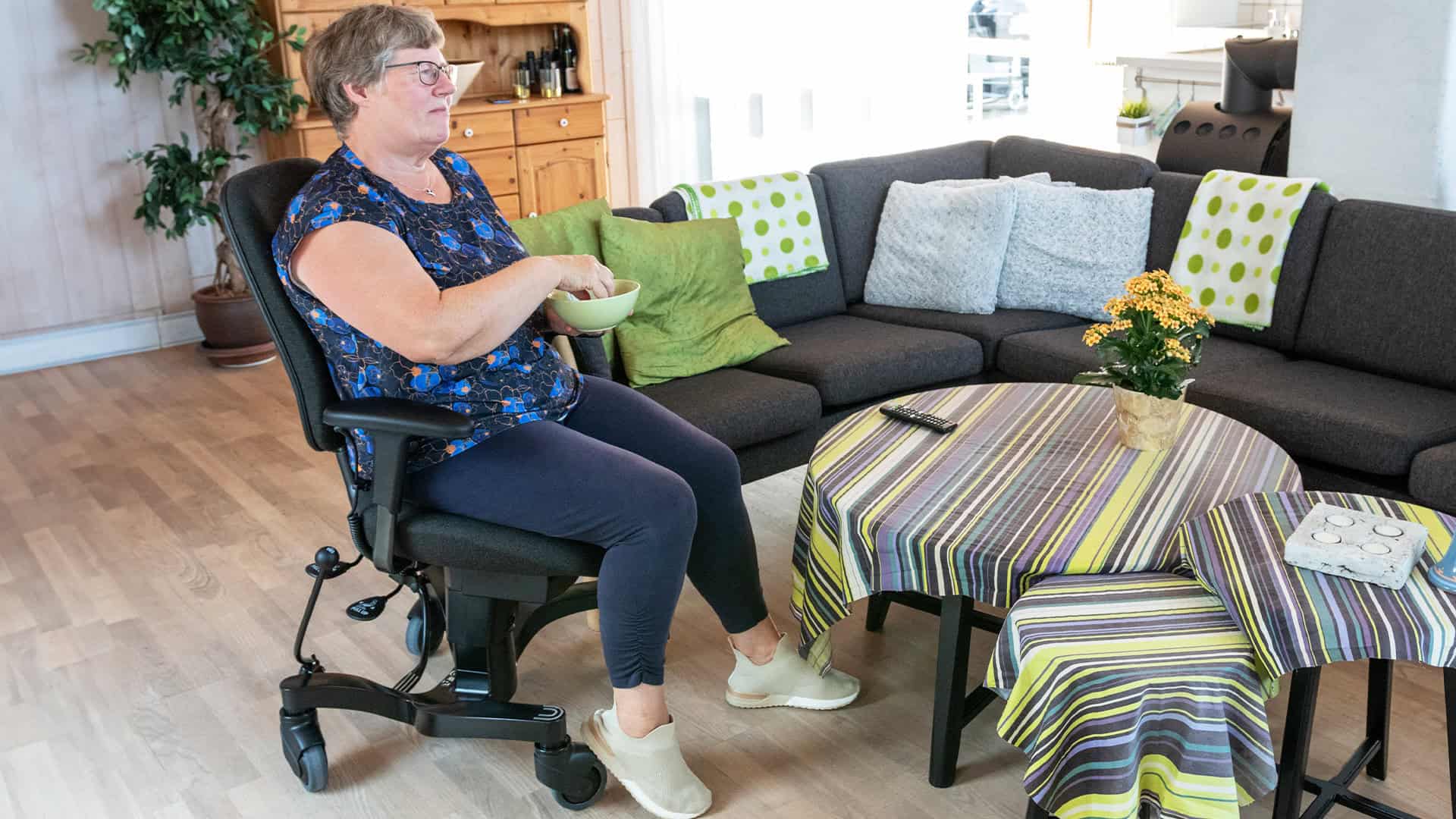
Given the challenges nursing homes face in maintaining staffing levels and providing highly personalized care, investing in solutions that promote independence at home becomes crucial. A promising approach to keeping older adults living independently involves integrating advanced mobility solutions like the VELA Independence Chair. This medically approved mobility chair is designed for home use, offering enhanced safety and freedom of movement while seated. It supports everyday activities such as cooking, dressing, and transferring, thereby reducing the physical burden on informal caregivers and potentially delaying the transition to nursing home care.
Supporting Aging in Place: A Practical Option
As seniors aim to maintain independence while aging in their own homes, the VELA Independence Chair serves as a valuable tool in this journey. Features such as a central brake for stability, electric height adjustability, and ease of movement ensure safety and conserve energy, addressing significant concerns for those preferring home life over nursing facilities. With a VELA Chair, everyday tasks like cooking or cleaning become less daunting, offering users dignity and freedom. While VELA represents just one of many possible solutions, its proven effectiveness illustrates how smart seating can substantially reduce the need for nursing home care. For more insights on mobility aids for elderly and solutions for reducing fall risks, exploring these options can promote a safer, more independent lifestyle at home.
Alongside smart seating and adaptive mobility aids, integrated smart home systems—such as AI-powered voice assistants, motion- or voice-activated lighting, smart locks, and video doorbells—are increasingly being adopted in both home and senior living environments. These innovations support autonomy, safety, and peace of mind, especially when combined with remote monitoring, passive health sensors, and telehealth tools that keep older adults connected to caregivers and clinicians (Heisinger Bluffs, 2025; UnitedHealthcare Community & State, 2025). These tools respond to the growing demand for intuitive, seamless supports that enhance quality of life and actively address the evolving needs of older adults and their caregivers.
Heisinger Bluffs, “The Future of Senior Living: Trends to Watch in 2025” (2025)
EverythingMedicalOnline.com, “The Latest Trends in Mobility Aid Technology for 2025” (2025-05-30)
UnitedHealthcare Community & State blog, “How enabling technology is transforming home-based care” (2025-08-11)
iHealthcareAnalyst, “Geriatric Assistive Devices Market: Trends, Technologies & Outlook” (2025)
LetsEnvision.com, “What’s Next for 2025: The Future of Assistive Technology & AI Assistants” (2025)
Juniper Communities, “Senior Living Trends in 2025” (2025)
American Association of Nurse Practitioners, “Nursing Home Technology Trends” (2026)
Skilled Nursing News, “AI and Staffing in Skilled Nursing” (2026)
Provider Magazine, “AI Integration in Long-Term Care Settings” (2026)
Senior Housing Industry Analysis, “The Evolution of Digital Platforms in Nursing Homes” (2026)