

Updated January 2026: We have updated the article to maintain current information on assistive technology advancements and trends in mobility aids supporting nursing home and community-based independence. All content has been reviewed to ensure accuracy as of January 2026.
New Glarus Nursing Home: A Comprehensive Look at Care and Community
Nestled in the charming town of New Glarus, Wisconsin, New Glarus Home stands as a tribute to the area’s rich Swiss heritage. As families consider this nursing facility for their loved ones, it’s important to weigh advantages against key metrics. According to Medicare.gov, the facility has an overall rating of 2.0 out of 5 from the Centers for Medicare & Medicaid Services (CMS) and a monthly cost range of $2,600 to $6,504.
Exploring Care and Community at New Glarus Home
New Glarus Home is designed to meet the medical and social needs of its residents through a variety of services. With a strong emphasis on community, the facility offers numerous activity centers and clubs that encourage resident engagement. An important consideration is the facility’s no-pet policy, which can impact residents who have companion animals. According to SeniorAdvice.com, residents frequently commend the vibrant community life, highlighting the home’s efforts to encourage interaction and engagement.
Deciphering Medicare Ratings: What They Mean for New Glarus Home
Understanding the CMS rating system is essential for evaluating New Glarus Home. The 2.0-star rating is an aggregate measure of health inspections, staffing, and quality measures as outlined by CMS. Compared to the Wisconsin average, New Glarus Home falls short, yet ratings may not provide the full picture. According to ProPublica Nursing Home Inspect, health inspection reports indicate areas needing improvement. Experts often recommend personal visits to better grasp the facility’s environment and care quality.
Cost Comparison: Evaluating New Glarus Home and Nearby Facilities
The financial aspect is a critical factor in nursing home care decisions. At New Glarus Home, costs range from $2,600 to $6,504 monthly, while regional averages hover around $5,279. Nearby facilities, such as The Waterford at Fitchburg, present varied cost structures and amenities, as detailed by A Place for Mom. Prospective residents should consider seeking guidance from a financial advisor to explore financial assistance options.
Life at New Glarus Home: Amenities and Social Engagement
Daily life at New Glarus Home features a rich tapestry of social activities and amenities. Residents can enjoy outdoor spaces and participate in community-building activities. Feedback from SeniorAdvice.com underscores an appreciation for the available activities, with many residents citing social interactions as a key highlight. This sense of community is crucial in providing a fulfilling experience for residents.
Recent advancements in assistive technology are also changing the way mobility and independence are maintained within and beyond nursing home settings. Current devices often integrate AI-powered features that analyze the user’s gait, predict intentions, and adapt to various terrains and obstacle scenarios in real time. These innovations greatly enhance safety and independence for older adults and those with limited mobility.[1][2][3]
Lightweight, foldable, and travel-friendly mobility aids—now utilizing ultra-light carbon fiber and robust compact folding mechanisms—have become increasingly popular. Such designs make it easier for residents and caregivers to handle devices both indoors and outdoors, encouraging greater participation in community life and social activities.[1][2][3]
Further, advances in battery technology have resulted in devices with all-day power through fast-charging, long-lasting lithium-ion batteries, and swappable options for uninterrupted use.[2][3] Many mobility aids also integrate voice-activated controls, working seamlessly with common voice assistants to improve usability for individuals with limited hand function or dexterity.[2][3]
Wearable exoskeletons and AI-enhanced rehabilitation robotics are now being used not only within clinical settings but also in the community, providing post-stroke gait support and mobility enhancement. These innovative wearables increasingly offer affordability and are validated in recent clinical trials, supporting personalized rehabilitation for improved outcomes.[2][3][4]
For residents with sensory impairments, AI-powered assistive devices—such as smart glasses and speech-to-text goggles—now enhance accessibility, communication, and daily engagement. Integration with IoT and remote caregiver monitoring also supports independence while providing oversight.[3][4][5]
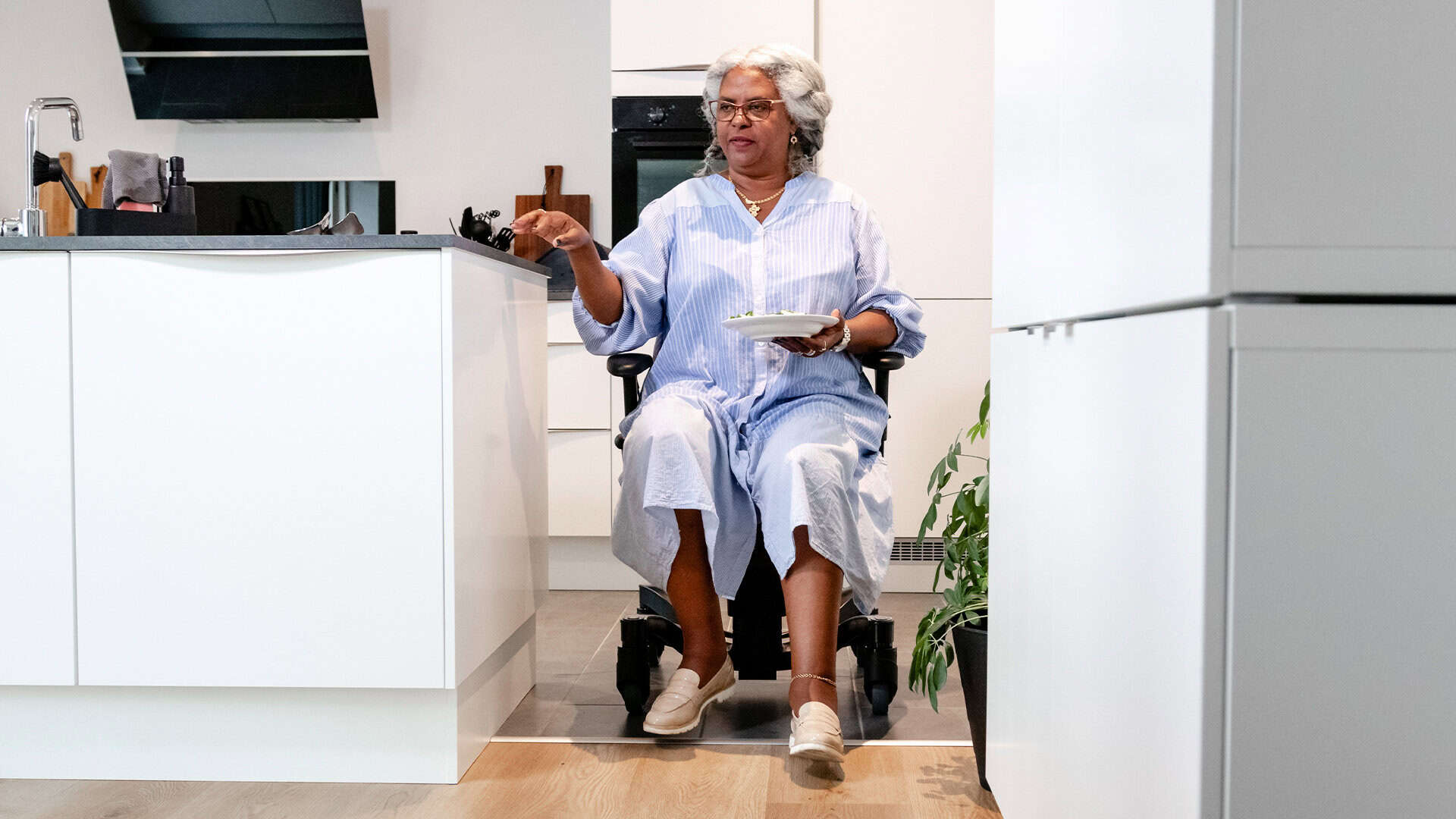
With the challenges faced by residents in nursing homes, such as limited mobility and the impact of falls, solutions that help older adults remain independent in their own homes become invaluable. The VELA Independence Chair represents one such solution. This medically approved mobility chair is specifically designed for use at home, offering enhanced safety and freedom of movement while seated. It supports daily activities like cooking, dressing, or transferring and significantly reduces the load on informal caregivers. Senior-friendly mobility solutions like VELA can make a meaningful difference in the lives of seniors seeking independence beyond a nursing home setting.
Supporting Aging in Place: A Practical Option
As many seniors prefer the familiarity and comfort of their own homes, VELA Chairs enable this choice by enhancing their ability to remain independent longer. Features like the central brake for enhanced safety, electric height adjustability, and ease of movement while seated address critical concerns such as fall risk, energy conservation, and simpler transfers. Utilizing chairs designed for elderly independence can potentially delay the necessity of a move to a nursing home, thereby maintaining dignity, freedom, and an active lifestyle. These solutions highlight how innovations in mobility aid can make home life more manageable and pleasant, allowing for engagement in daily routines like cooking, cleaning, and relaxing, all with added safety and reduced caregiver burden. Recent device designs incorporate feedback from users and healthcare professionals, ensuring adaptability to individual needs and inclusive functionality even for those with upper limb limitations.[4][5] While VELA is a well-recognized and effective option, families are encouraged to explore a variety of supportive strategies tailored to individual needs and preferences.
Sources
- EverythingMedicalOnline.com, “The Latest Trends in Mobility Aid Technology for 2025” (May 2025)[1]
- AllStarWheelchairs.com, “The Latest Trends in Mobility Aid Technology for 2025” (Aug 2025)[2]
- Accio.com, “Trending Disabled Equipment 2025: AI Mobility & Assistive Tech” (Aug 2025)[3]
- ConnsenseReport.com, “13 CES 2025 Award-Winning Assistive Tech Innovations” (Feb 2025)[4]
- LetsEnvision.com, “The Ultimate Guide to the Best Assistive Technology for 2025” (Jan 2025)[5]
- Medicare.gov
- SeniorAdvice.com
- CMS
- ProPublica Nursing Home Inspect
- A Place for Mom