

Updated January 2026: We have updated the article to reflect the repeal of federal minimum staffing requirements for nursing homes, changes to CMS inspection and Five Star rating methodologies, and the continued emphasis on individualized care based on resident needs. No major updates on assistive device innovations or rehabilitation practices were found post-2025, but recent policy and rating changes may affect care standards at facilities such as Newark Manor Nursing Home.
Newark Manor Nursing Home
For those researching “Newark Manor Nursing Home,” it is crucial to distinguish between the facilities sharing this name in Newark, NY, and Newark, DE. These facilities differ significantly in ownership, services, and care quality, providing diverse options for potential residents and their families.
Overview of Newark Manor Nursing Home: Locations & Services
Newark Manor Nursing Home in Newark, NY, is part of the Hurlbut Care Communities, featuring 60 certified beds with a daily occupancy of approximately 53 residents, which represents a nearly 90% occupancy rate, as per NYS Health Profiles. In contrast, the Newark, DE facility is situated at 254 West Main Street. It has 67 certified beds and hosts around 63 residents daily, according to ProPublica Nursing Home Inspect. The Delaware site offers a more home-like environment, prioritizing family meal services and all-inclusive rates, thus making it a welcoming option for residents who seek a personalized setting.
Quality Ratings, Staffing, and Resident Safety
The CMS Five-Star Quality Rating System is a pivotal tool for understanding the performance and service quality of nursing homes. According to the CMS Five-Star Quality Rating System, the Newark, NY facility exceeds state norms with 3.35 nurse hours per resident per day, while Newark, DE offers a slightly higher nurse-to-patient ratio to accommodate their tailored service approach. Guidance from these ratings aids families in making informed decisions crucial to caregiving and resident safety.
Recent regulatory changes effective December 2025 have repealed the federal minimum staffing requirements for nursing homes, including mandates for total nursing care hours and 24/7 onsite RN coverage. Facilities must now follow prior rules, requiring an RN onsite at least 8 consecutive hours daily, and determine their staffing levels through ongoing assessment of resident needs. Families should be aware that these changes may impact the way facilities staff and provide care. Additionally, CMS updated Five Star ratings methodology beginning July and October 2025, changing the survey history window and including data on antipsychotic medication claims, which may affect a facility’s rating and how care quality is reflected (AHA, Dec 2, 2025, Medicare Advocacy, Reed Smith, 2025, Medicare.gov, 2026). Regulatory expectations for resident safety, autonomy, and accessibility continue to be emphasized, with staffing adjusted according to facility assessment of residents’ care requirements.
Inspection Results and Deficiency Reports
Inspection results and deficiency reports are key indicators of a facility’s performance. The Newark, NY facility has not incurred any fines or penalties over the past three years, showcasing a commitment to maintaining high resident care standards despite turnover rates, as cited by ProPublica Nursing Home Inspect. Conversely, the Delaware facility has documented 19 deficiencies, emphasizing areas such as safety but with efforts underway to address these issues, as highlighted in the Delaware Health Inspection Report.
The most recent inspection and complaint survey data (2024-2025) for Newark Manor indicate some persistent deficiencies related to resident rights, care planning, and infection control in both locations, which are being actively addressed to improve communication, resident care plans, and overall safety (Delaware Division of Health and Social Services, Medicare Nursing Home Compare). User feedback, including comments that the facility is “old and needing updating,” underscores the importance of facility assessments and continuing improvements in operation and care quality.
Costs, Programs, and Amenities
When selecting a nursing home, it is crucial to evaluate costs relative to the provided services. While specific costs are not available publicly, both facilities incorporate unique programs like individualized care plans and community engagement activities, ensuring residents enjoy comprehensive care. More detailed financial information can be sourced from platforms like SeniorHousingNet.
For residents in Delaware, programs such as PACE are available to those age 55 and older who meet nursing facility level-of-care criteria and income limits (roughly $2,829/month). This can supplement services like rehabilitation, personal, or medical care for qualified individuals (Medicare.gov, 2026).
Recent expert guidance continues to emphasize multidisciplinary, technology-assisted approaches in nursing homes, such as digital health monitoring and tele-rehabilitation. However, no new research post-May 2025 was identified regarding advances in assistive devices, ergonomic design, or inclusive rehabilitation (PubMed 2025).
Alternatives to Traditional Nursing Homes
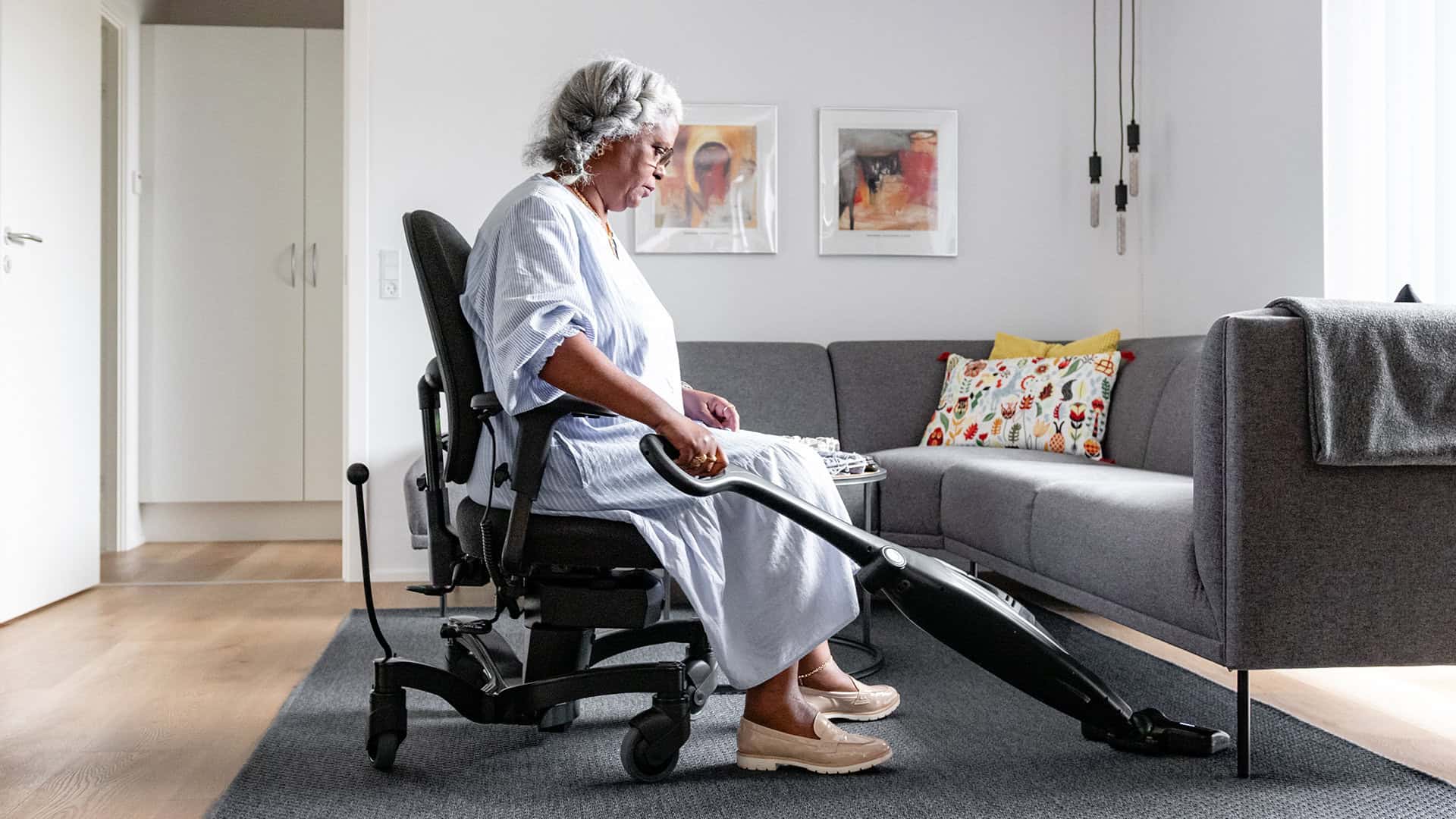
Beyond traditional nursing homes, maintaining independence for the elderly can be enhanced through thoughtful innovations. The VELA Independence Chair is one such solution, offering medically approved design features that promote safety and ease of use at home. The chair’s capabilities, including freedom of movement while seated and ergonomic support for daily activities such as cooking and dressing, allow older adults to remain active and manage household tasks. Additionally, this ease of use reduces the caregiving burden on family members, providing peace of mind and allowing loved ones to continue living in the comfort of their homes.
Emerging technologies in assistive devices now include AI-based smart solutions, wearable sensors, and robotic exoskeletons, which have begun pilot implementation in some geriatric care settings and are associated with improved rehabilitation and functional independence for residents. Advances in ergonomic design—such as pressure-relieving seating and adaptive furniture tailored to individual mobility and health—are now essential features for comfort and the prevention of secondary complications like pressure ulcers (WHO Assistive Technology 2025, PubMed 2025). Note, however, that there have been no significant updates or breakthroughs in these technologies identified in authoritative sources after May 2025.
Exploring Alternatives to Nursing Homes
For seniors wishing to remain in their homes, mobility solutions like the VELA Independence Chair play a pivotal role in extending their autonomy. VELA chairs are designed with features that directly enhance safety and usability, such as a central brake that prevents unwanted movement, and electric height adjustability that makes transfers simpler and safer. By allowing seniors to engage more fully in activities like cooking, cleaning, and even relaxing, these chairs support a lifestyle marked by dignity and freedom. The ability to safely manage daily tasks can delay, or in some cases, eliminate the move to a nursing home. While VELA is not the only choice, it is a proven option that combines innovation with practical support for senior independence. More information about these beneficial features can be found through resources like Senior Mobility Solutions.
Contemporary best practice in assistive technology adoption now centers on user-centered design, actively incorporating feedback from residents and caregivers to ensure that devices and rehabilitative environments meet functional and psychosocial needs. The use of digital health platforms for coordinating care, collecting real-time data, and optimizing assistive device use is growing in nursing homes, resulting in improved outcomes and operational efficiency (CMS 2025).
Sources:
– AHA, Dec 2, 2025: CMS repeals minimum staffing requirements
– NACo: HHS repeals nursing home staffing mandate
– Medicare Advocacy: CMS rescinds staffing rule
– Medicare Rights Center, Dec 11, 2025: CMS rescinds requirements
– Reed Smith, 2025: Legislative updates incl. revalidation & Five Star changes
– Medicare.gov: Newark Manor Medicare data, updated Jan 14, 2026
– PubMed 2025: AI and robotic assistive devices in geriatric rehabilitation
– WHO 2025 Assistive Technology Guidelines
– U.S. Dept. of Health & Human Services and CMS updates on nursing home regulations
– Delaware Division of Health and Social Services: Nursing Home Survey Reports (Newark Manor)
– Harvard Medical School/Harvard Health Publishing 2025: Rehabilitation Tech Trends