

Updated September 2025: We have updated the article with new findings on smart assistive technologies, regulatory changes supporting resident-centered care, remote monitoring solutions, and advances in ergonomic furniture design for seniors in nursing homes and home care environments.
Comprehensive Guide to Pine Acres Nursing Homes
When families are searching for “Pine Acres Nursing Homes,” understanding the nuances of each facility operating under this name across the United States becomes crucial. There are three main Pine Acres facilities known for their unique attributes in elder care: in Lexington, North Carolina; West Des Moines, Iowa; and Madison, New Jersey. This article delves into the expertise of these facilities, providing families with essential knowledge to help in making informed decisions.
Understanding the Pine Acres Nursing Home Network
The Pine Acres network includes three independently operated facilities, each with distinct characteristics related to ownership and operational standards:
- Pine Acres Center for Nursing and Rehabilitation in Lexington, North Carolina, operates as a for-profit corporation. This structure may influence its focus on resource allocation, impacting both care quality and operational priorities.
- Pine Acres Rehabilitation and Care Center in West Des Moines, Iowa, serves as a free-standing Nursing/Skilled Nursing Facility with its unique administrative oversight.
- Pine Acres Rehabilitation and Healthcare in Madison, New Jersey, also operates under a for-profit model, with partnerships shaping its approach to healthcare delivery.
Quality of Care Analysis: Comparing Pine Acres Facilities
The quality of care varies significantly among the Pine Acres facilities. According to Medicare.gov, Pine Acres in North Carolina has faced criticism for 30 deficiencies, including abuse and medication errors. These issues have culminated in a notable fine of $165,280 as detailed by ProPublica Nursing Home Inspect.
The Iowa facility currently grapples with challenges related to caregiver training, amidst a “Loss of NA Training” status. According to the Iowa Department of Inspections & Appeals, this impacts their caregiving capacity, a critical aspect for potential residents to consider.
Staffing and Resident Care Standards
Staffing norms and turnover rates are pivotal in determining the quality of resident care. In North Carolina, with 3.28 nurse hours per resident daily, the staffing levels fall below the state average, potentially impacting the continuity of care. Moreover, the high nurse turnover rate of 58.8% could disrupt the caregiving environment, creating further challenges as remarked by numerous family testimonials.
For instance, residents may face scenarios where lack of staff consistency can foster unease and hinder the development of trust. A family member shared, “Seeing new faces every week makes it hard for my father to feel settled, impacting both his emotional and physical well-being.”
Inspection Results and Compliance History
Inspection outcomes reveal varied compliance challenges across Pine Acres facilities. In New Jersey, while there are slight operational improvements with 3.66 nurse hours per resident, the facility incurred fines amounting to $3,159 for diverse violations as highlighted by ProPublica. This underscores the need for ongoing transparency and quality improvement initiatives.
Technology and Innovation in Nursing Home Care
Recent advances are redefining the standard of care in nursing homes. Facilities are increasingly adopting smart and AI-powered assistive devices to enhance resident safety and autonomy. Smart wheelchairs now feature GPS, collision avoidance, health monitoring, voice control, and app connectivity, providing tailored mobility solutions and improved safety for users. In addition, smart beds equipped with sensors monitor vital signs, detect movement, and help prevent falls or pressure ulcers. Data from these beds can integrate with electronic health records, making care documentation more efficient and personalized [2], [3].
Telehealth platforms, remote sensors, and smart locks are increasingly used to promote safety and autonomy, reducing the need for constant staff intervention and enabling seniors to maintain a sense of independence. Technologies such as remote-enabled TVs and set-top platforms have improved engagement for older adults with cognitive impairment, providing social interaction and cognitive support through video connections with caregivers and healthcare providers. These tools support the goal of aging in place, whether in a nursing home or at home, while also easing the burden on caregivers [1], [5], [7].
Industry reforms, including new regulations from the Centers for Medicare & Medicaid Services (CMS), place greater emphasis on resident-centered care and the adoption of personalized, technology-enhanced services. These reforms are designed to reduce administrative burden for facilities and create a more supportive environment for the integration of innovative care solutions [4].
Ergonomic Design and Rehabilitation Trends
Inclusive and ergonomic design improvements are now central to senior care environments. Adjustable furniture, such as VELA chairs, has been shown to enhance comfort, mobility, and safety, both within institutional settings and for those aging in place. For individuals living with dementia, hybrid interventions that combine AI-driven virtual reality exercises with physical activity are demonstrating positive short-term effects on cognition and social engagement, benefiting both residents and their informal caregivers [4], [7].
Choosing the Right Solution: Beyond the Numbers
Deciding on a suitable care facility is a multifaceted process, far beyond interpreting ratings and inspection results. While Pine Acres locations offer significant services, evaluating all possible care options and innovative solutions like VELA care solutions is necessary.
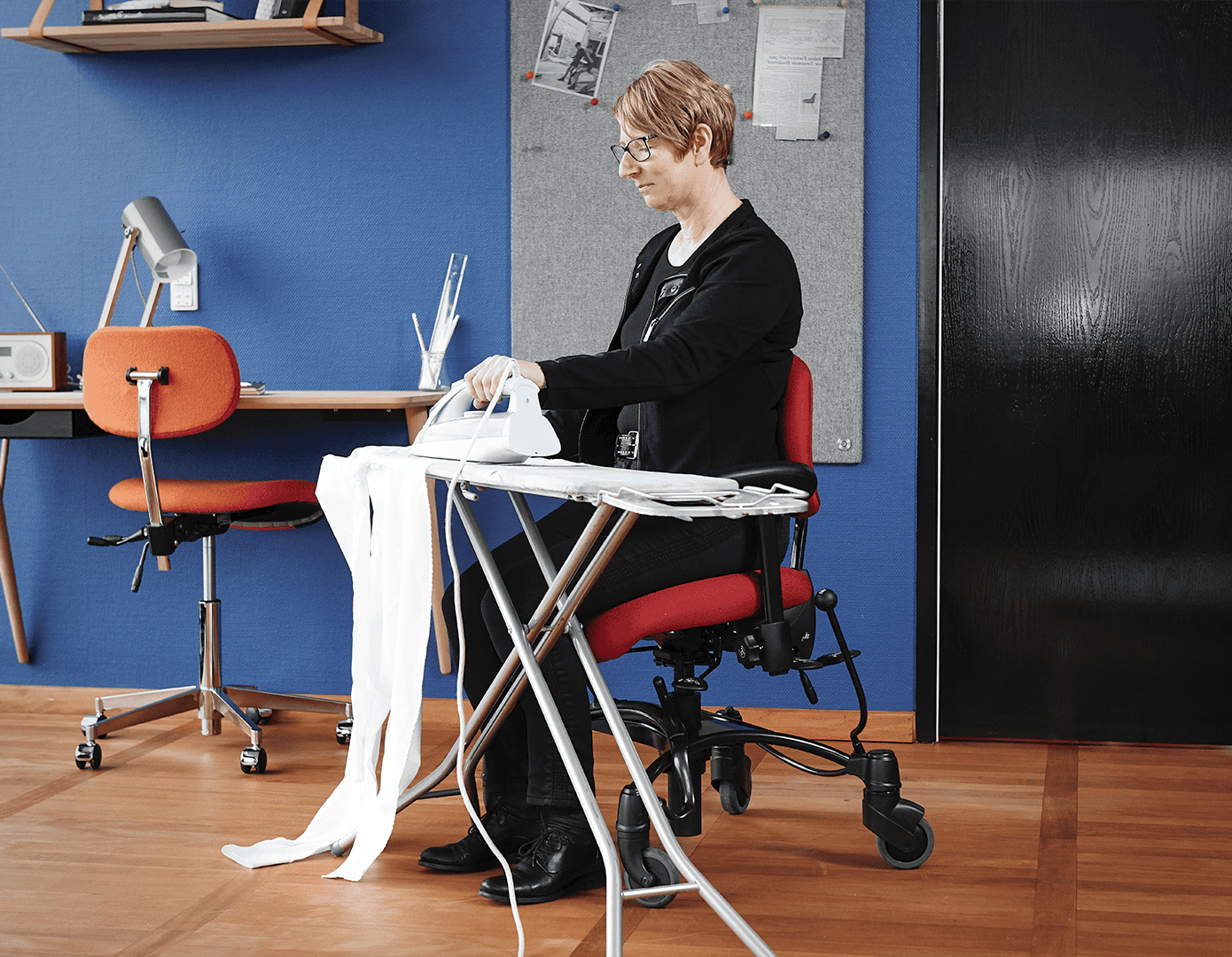
Alternatives such as VELA chairs afford a flexible care environment that adapts to mobility requirements, serving as a bridge between institutional care and living independently. They offer a way to preserve family bonds while providing individualized care support, crucial for maintaining a familiar and comforting environment for seniors.
Supporting Aging in Place: A Practical Option
Embracing alternatives like VELA Chairs allows seniors to enjoy the familiar comforts of their own homes while receiving necessary support. These chairs address concerns like safety and energy preservation, offering features such as a central brake for stability and electric height adjustability for ease of transfers. The design makes daily activities, including cooking and cleaning, more manageable, thus delaying the need for nursing home care. By fostering an environment of dignity, freedom, and safety, VELA Chairs empower residents to remain independent longer, supporting both their well-being and that of caregivers. While it is not the only solution available, VELA offers a proven, practical approach to enhance life quality.
Sources
- UnitedHealthcare Community & State. “How enabling technology is transforming home-based care” (2025).
https://www.uhccommunityandstate.com/content/blog-post/blogs/how-enabling-technology-is-transforming-home-based-care - WGU Blog. “6 Technologies Transforming Patient Care,” includes smart beds and portable monitors (2025).
https://www.wgu.edu/blog/7-nursing-technologies-transforming-patient-care1903.html - Everything Medical Online. “The Latest Trends in Mobility Aid Technology for 2025,” covers smart wheelchairs and integrated technology (2025).
https://everythingmedicalonline.com/blogs/news/the-latest-trends-in-mobility-aid-technology-for-2025 - Meyland-Smith.com. “In The Notebook: Is the House the Nursing Home Experience?” update on regulatory & tech trends in nursing homes (Aug 2025).
https://meyland-smith.com/nursing-home/in-the-notebook-is-the-house-the-nursing-home/ - JMIR Rehabilitation and Assistive Technologies. “Utilizing Smart Televisions as Assistive Technology to Improve Communication in Older Adults with Cognitive Impairment” (2025).
https://rehab.jmir.org/2025/1/e73050 - PMC (PubMed Central). “Digital assistive technologies for community-dwelling people with dementia: current challenges and future priorities” (2025).
https://pmc.ncbi.nlm.nih.gov/articles/PMC12319280/