

Updated September 2025: We have updated the article with the latest advancements in assistive technology, including AI-powered mobility aids, remote health monitoring, smart home integrations, and telehealth solutions now shaping modern nursing home care. The guidance now reflects evolving regulatory standards, the importance of digital literacy for residents, and cutting-edge, person-centered rehabilitation practices.
Exploring Poplar Springs Nursing Center: A Comprehensive Guide for Prospective Residents and Families
Finding the right nursing home is a significant decision for many families, and Poplar Springs Nursing Center in Meridian, Mississippi, frequently arises in these discussions. Known for its commitment to providing care in a serene environment, Poplar Springs holds a distinctive position in the area. Still, it’s essential to evaluate the facility thoroughly. According to Medicare.gov, the facility currently has an overall rating of 2.0 out of 5 stars, which suggests some areas for improvement, even as it offers valuable resources for specific care needs, such as a specialized dementia care unit.
Comprehensive overview of Poplar Springs Nursing Center
Located at 6615 Poplar Springs Drive in Meridian, MS, Poplar Springs is a for-profit organization under the governance of a limited liability company. This 91-bed facility is certified with both Medicare and Medicaid, reflecting compliance with essential public health standards (EMBDC, SNFData). Owned entirely by Charles Kelly and managed by Trend Consultants LLC, Poplar Springs is prepared to meet a variety of healthcare and living needs.
Specialized care and rehabilitation services
Poplar Springs nursing home houses a significant 20-bed dementia care unit, tailored specifically to residents with cognitive health needs. The facility extends various rehabilitation services, including physical, occupational, and speech therapy, aiming to support the recovery and maintenance of critical skills among its residents. According to ProPublica, the staffing averages 4.4 nursing hours per resident daily, which is slightly above the state’s average, indicating a commitment to adequate care provision.
Reflecting recent advancements, modern rehabilitation now incorporates adaptive and AI-driven assistive technologies. Sensor-based mobility aids and robotic support devices are increasingly used in therapies to help residents regain mobility and independence. Remote monitoring tools and data-driven insights also contribute to personalizing rehabilitation plans, supporting proactive management of chronic conditions and providing timely response to health changes (Everything Medical Online, PubMed Central).
Living environment and amenities at Poplar Springs
The facility provides a comfortable living environment with private rooms and communal spaces conducive to social interactions. Residents have access to a modern therapy center and a range of activities designed to enhance their quality of life. According to Seniorly and FamilyAssets, there is an emphasis on creating a family-like atmosphere, evident in the facility’s event planning and shared community spaces.
The adoption of smart home integrations is reshaping resident experiences in nursing facilities. Voice-activated assistants, automated lighting systems, and smart medication dispensers are being increasingly used to promote safety and support daily routines. These advanced amenities help prevent falls, reduce medication errors, and offer accessible controls for lighting and temperature, significantly enhancing independence and comfort for residents (Harvard Business Review Healthcare, ButterflyMX).
Financial considerations and payment options
Understanding financial commitments is crucial for prospective residents and their families. Poplar Springs offers a varied pricing structure, ranging from $2,750 to $6,692 per month, with an average monthly cost of approximately $4,721 (Medicare.gov). Additionally, the facility’s Medicare and Medicaid certification offers predictable coverage options, which can help alleviate some financial burdens associated with long-term care.
Innovations in care and mobility solutions
Advancements in assistive technology now offer seniors robust options, such as AI-powered wheelchairs featuring GPS navigation, collision avoidance, and real-time health monitoring. Wearable health devices enable continuous tracking of vital signs, while telehealth platforms give residents and their families prompt access to healthcare professionals for consultations, follow-ups, or urgent needs. These solutions personalize care and bolster resident safety and autonomy, while easing the demand on caregivers and staff (SynchronyFL, UnitedHealthcare Community & State, iHealthcareAnalyst).
Current guidelines emphasize privacy, ethical use of artificial intelligence, and comprehensive digital literacy training for senior users. These considerations ensure residents can safely operate smart devices and reap their full benefits, while standardized technology simplifies integration and use across care settings (PubMed Central).
Supporting aging in place: A practical option
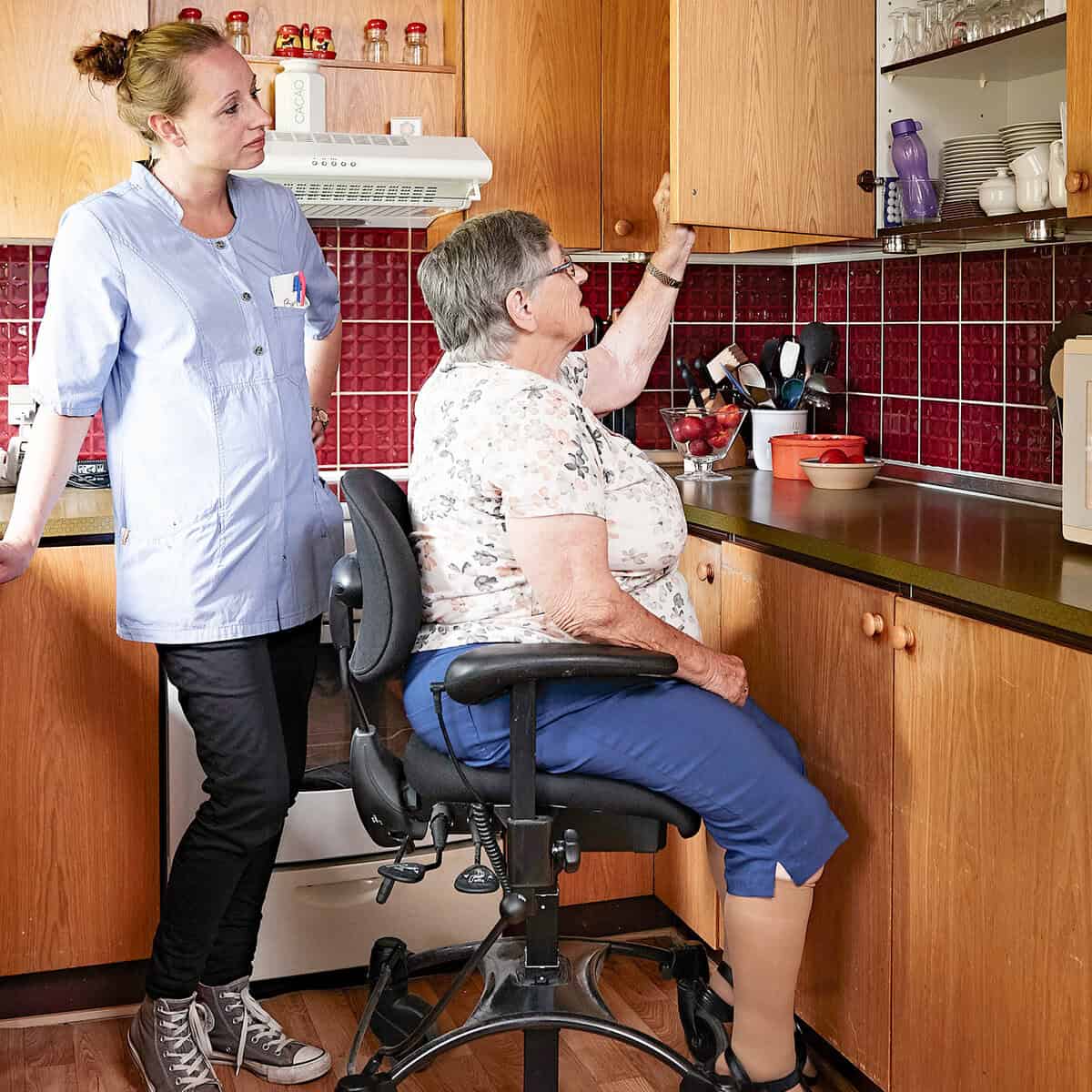
With the increasing desire to age gracefully at home, solutions like the VELA Chair provide crucial support for seniors. Designed to offer safety features such as a central brake, along with electric height adjustability and easy mobility while seated, these chairs help navigate daily tasks with confidence. Whether preparing meals or enjoying leisure time, VELA Chairs promote a dignified, independent lifestyle. Such innovations extend the period seniors can remain in their homes, reducing reliance on extensive care facilities.
Broader advances, such as AI-powered rehabilitative robotics and brain-computer interfaces, are making assistive devices lighter, more adaptive, and responsive to individual preferences and needs. Person-centered technology integration supports safer, more autonomous living, and helps address professional caregiver shortages by automating routine monitoring and assistance. While VELA is one proven approach, it’s important for families to explore a breadth of options, ensuring choices align with their loved ones’ needs and aspirations. For more insights into enhancing senior mobility, you can explore Mobility Solutions for Seniors.
- SynchronyFL: “The Future of Home Health Care: Trends to Watch in 2025“
- ButterflyMX: “Senior Living Technology Trends 2025“
- Harvard Business Review Healthcare: “The Future of Senior Living: Trends to Watch in 2025“
- Everything Medical Online: “The Latest Trends in Mobility Aid Technology for 2025“
- UnitedHealthcare Community & State: “How enabling technology is transforming home-based care“
- iHealthcareAnalyst: “Geriatric Assistive Devices Market: Trends, Technologies & Outlook“
- PubMed Central: Giansanti D. (2025) “Integrating AI and Assistive Technologies in Healthcare“