

Updated February 2026: We have updated the article to reflect the repeal of federal nursing home minimum staffing standards, advancements in AI-driven assistive and remote monitoring technologies, and current CMS Five-Star rating changes for more accurate and transparent quality assessments. Recent trends in personalized rehabilitation, wearable health devices, and integrated platform solutions are also included.
Signature HealthCARE: Leading the Evolution of Nursing Home Care
As the demand for high-quality senior care continues to rise, Signature HealthCARE stands out as a key player in the industry, known for its commitment to excellence and innovation. With a robust network of 72 affiliated facilities across the eastern United States, Signature HealthCARE has been recognized multiple times by authoritative sources such as Newsweek and U.S. News & World Report, underscoring its prominence in elder care.
Understanding Signature HealthCARE’s Mission and History
Founded in 2007, Signature HealthCARE embarked on a mission to revolutionize the elder care landscape. With over 18,000 dedicated professionals operating across eight states, Signature HealthCARE has marked significant milestones in transforming how senior care is perceived and delivered. The company’s focus remains steadfast on reshaping the quality of life for its residents, ensuring that they receive respectful, compassionate, and high-quality care. Notably, the organization has been certified as a Great Place to Work, with 85% of employees affirming it as an excellent workplace, reflecting a positive staff culture integral to its high service standards.
Comprehensive Services and Specialties at Signature HealthCARE
Signature HealthCARE offers a wide range of services designed to cater to the varied needs of its residents. These services include skilled nursing, which provides 24/7 medical support, and rehabilitation programs tailored for residents recovering from surgery or illness. The assisted living facilities offer a balance of independence and assistance with daily activities, while the home health services extend care into the comfort of residents’ homes. Signature HealthCARE also specializes in cognitive care, focusing on personalized treatment plans to support residents with memory disorders. Each service is rooted in patient-centered care principles, thus ensuring that each resident receives customized care that respects their individual preferences and health requirements.
Quality Ratings and Recognitions: Setting the Standard in Elder Care
Signature HealthCARE’s facilities are consistently recognized for their commitment to excellence. Newsweek’s Best Nursing Homes 2023 list features several of Signature’s facilities, including the Fountain Circle Care & Rehabilitation Center in Kentucky, ranked #2 in the state. These accolades are supported by quality metrics from the Centers for Medicare & Medicaid Services, which highlight areas where Signature HealthCARE exceeds national averages, particularly in quality ratings and patient outcomes. For instance, Signature Healthcare of Erin in Tennessee and Signature HealthCARE of Putnam County in Tennessee have also been highlighted for their top-tier services, showcasing the organization’s dedication to maintaining high standards.
While these recognitions signify achievement, it is also essential to consider areas for improvement, like maintaining staffing levels and managing nurse turnover rates, which average around 49.7% compared to the national average.
In 2025 and 2026, the Centers for Medicare & Medicaid Services (CMS) introduced substantial updates to its survey methodologies and nursing home quality assessments. CMS revised the Five-Star Quality Rating System by using only the two most recent inspections for each facility and adding antipsychotic medication claims data to improve rating precision and transparency. CMS also enhanced the visibility and accountability of nursing home chains by making performance data more accessible on the Nursing Home Care Compare platform. Furthermore, CMS released updated surveyor guidance with clarified compliance requirements and medical director responsibilities, strengthening quality and safety across the sector. Importantly, as of February 2026, CMS repealed federal nursing home minimum staffing standards (including the 3.48 total nursing hours per resident day and 24/7 onsite RN coverage), placing an emphasis instead on individualized facility assessments of resident acuity needs. This regulatory change was enacted to support broader access, including for rural residents, and marks a significant shift from earlier, more rigid mandates. These regulatory enhancements contribute to a more accurate and transparent quality rating system, directly impacting facilities like those managed by Signature HealthCARE.[4][6][7][8][10][12][14][16]
Signature HealthCARE’s Innovative Approach to Elder Care
Innovation is at the core of Signature HealthCARE’s philosophy. A prime example is the implementation of the Triple Aim Initiative, aiming to enhance patient experience, improve population health, and reduce per capita healthcare costs. This approach has been particularly effective in managing high-risk elderly patients with complex needs. Signature HealthCARE employs coordinated care models to streamline patient management and reduce unnecessary spending, thus delivering efficient care without compromising quality. Successful implementation stories abound, highlighting improvements in patient satisfaction metrics and successful health outcomes.
The evolution of elder care in recent years includes the adoption of advanced assistive technologies and digital healthcare tools. Smart mobility aids—such as AI-enabled wheelchairs with GPS, automatic braking, voice control, collision avoidance, and real-time health monitoring—are increasingly integrated into care environments to enhance user safety, independence, and mobility. 2026 trends show rapid adoption of AI-powered remote monitoring and predictive analytics platforms, which track real-time vitals, gait, and wounds, helping to reduce falls, infections, and hospitalizations. Wearable devices for continuous monitoring of vital signs and immediate detection of health changes have become mainstream, allowing for proactive interventions and enhanced personalized outcomes. Smart home technologies, including voice assistants, automated lighting, smart locks, and video doorbells, continue to support daily living and promote aging in place.[1][3][5][7][13][15]
Inclusive, homelike designs now often integrate these technologies seamlessly, maximizing comfort and promoting resident engagement. Rehabilitation and therapy tools have advanced, with increased use of robotics and virtual reality—not only in physical recovery but also in cognitive therapy for dementia, reflecting a personalized, tech-enabled care focus.[1][11][15]
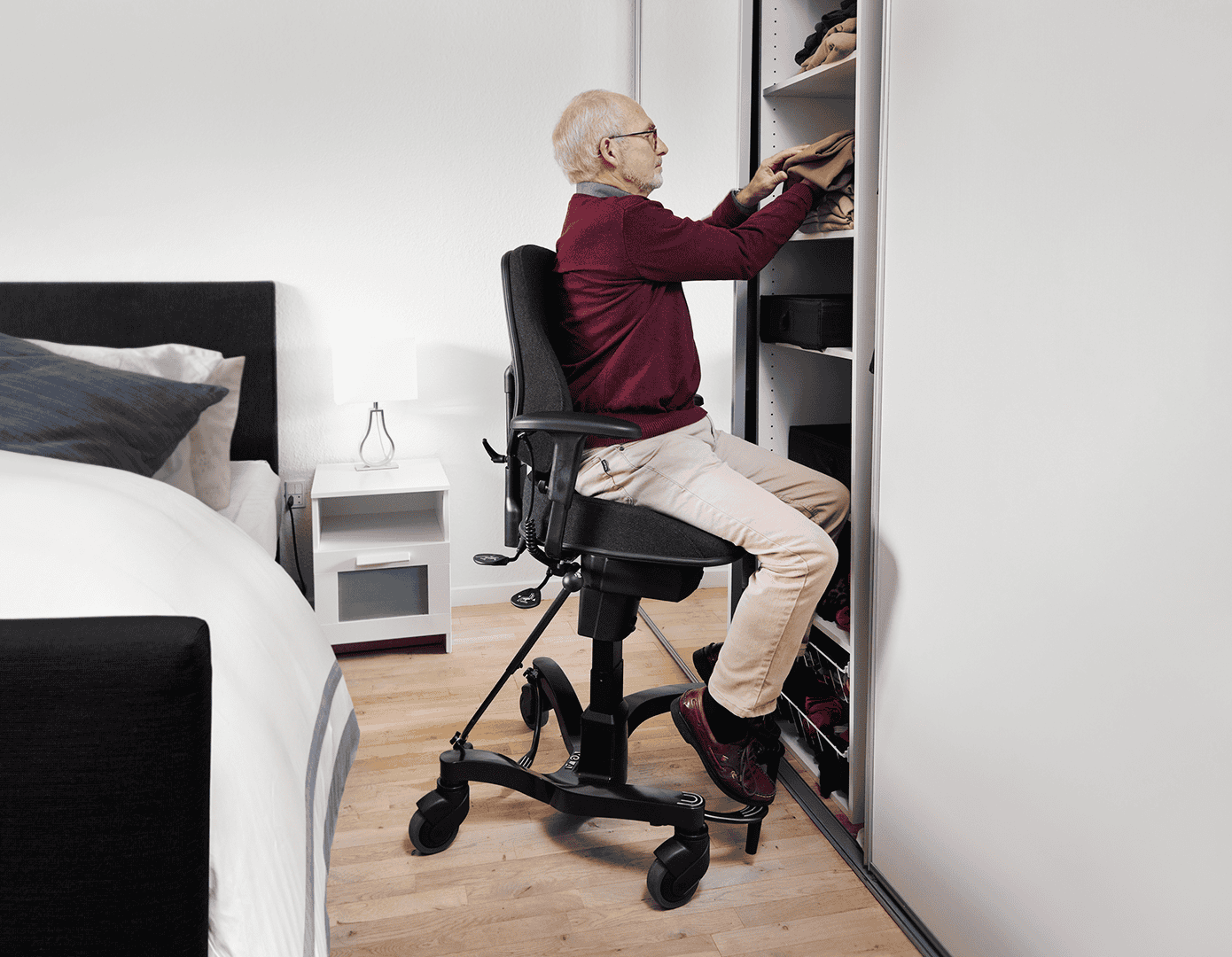
The transition into nursing homes often comes with challenges around supporting residents’ independence and mobility. Innovative solutions that enable older adults to retain their autonomy while receiving necessary care are increasingly important. Among these, VELA offers significant promise — as a medically approved mobility chair designed for home use. It enhances safety, provides freedom of movement while seated, and supports daily activities like cooking and dressing, all while reducing the caregiver burden.
How Mobility Solutions Like VELA Make a Difference
Mobility solutions such as the VELA Chair can greatly prolong the period during which older adults remain independent in their own homes. Featuring a central brake for safety, electric height adjustability, and ease of movement while seated, the chair addresses key challenges like fall risks and energy conservation — a focal point for maintaining independence. The VELA Chair allows seniors to engage in everyday tasks, from preparing meals to relaxing safely, thereby promoting freedom and dignity. Such equipment provides a vital layer of support that not only eases daily activities but could also postpone the need for nursing home care.
These mobility solutions are part of a broader movement toward highly customized and adaptive devices. Rehabilitation and ergonomic products are increasingly using user behavior analytics to tailor support and adapt intelligently to individual needs, promoting autonomy and comfort for seniors with diverse abilities. Inclusive product design enables easier adoption and greater satisfaction, reflecting the shift toward person-centered and tech-enabled care models in both nursing homes and home-based settings.[1][3][5][7][11][13][15][17]
While VELA is a proven solution, it exemplifies broader strategies critical for supporting seniors living independently and reducing falls among elderly residents, emphasizing a commitment to enhancing life quality and lessening caregiver pressures.
Sources:
- GlobeNewswire, U.S. Assistive Technologies for Older Adults Market Analysis Report 2025 [1]
- CMS Repeals Minimum Staffing Standards for Nursing Homes (porh.psu.edu) [4]
- Nursing Homes – CMS (cms.gov) [6]
- Top Five Health Care Trends for 2026 (aanp.org) [7]
- HealthIndustryWashingtonWatch, summary of 2025 CMS legislative and regulatory updates for LTC facilities [8]
- CMS updates to long-term care surveyor guidance effective February 2025 [12]
- HHS Cleanup of Federal Nursing Home Minimum Staffing Standards Rule (hhs.gov) [14]
- AHCA/NCAL CMS Appendix PP updated surveyor regulations, April 2025 [16]
- GlobeNewswire on 2025 smart mobility aid technologies [5]
- UnitedHealthcare on technology transforming home-based elder care (smart home, remote monitoring) [13]
- Top Trends That Will Shape the Skilled Nursing Sector in 2026 (skillednursingnews.com) [3]
- Synchronyfl.com, The Future of Home Health Care: Trends to Watch in 2025 [15]
- Peters Creek, The Role of Assistive Technologies in Senior Care [17]
- Recent Legislative and Regulatory Updates for Long-Term Care Facilities (reedsmith.com) [8]