

Updated February 2026: We have updated the article to reflect recent changes including the 2026 repeal of federal nursing home staffing mandates, the continued importance of individualized facility assessments for staffing, rapid growth in AI-powered assistive technologies including wearables and robotics, major innovations from CES 2026 such as smart glasses for the blind, and new CMS Five-Star rating guidance and data transparency measures.
Understanding “Twin Lakes” Nursing Homes Across the United States
Facilities like “Twin Lakes” exist in various states, each offering unique characteristics. For instance, Twin Lakes Rehabilitation and Healthcare Center in Greensburg, PA, emphasizes rehabilitation, while Burlington, NC hosts Twin Lakes Community, a Continuing Care Retirement Community (CCRC) offering a full continuum of care. The North Carolina Department of Health and Human Services notes that Twin Lakes Community provides an essential transition from private pay to Medicaid, aiding ongoing care plans.
Comparing Quality Metrics of Twin Lakes Facilities
Quality metrics vary widely among Twin Lakes facilities. For example, Twin Lakes Rehabilitation and Healthcare Center in Greensburg is a for-profit entity with documented care quality deficiencies. ProPublica Nursing Home Inspect reports that staffing levels at Greensburg fall below the state average, negatively affecting care quality. Conversely, Twin Lakes Community in Burlington is a non-profit organization, typically reinvesting profits into care enhancements. Non-profits often deliver superior outcomes due to increased funding for patient care.
Resident Experiences and Reviews at Twin Lakes Communities
Resident reviews provide valuable insights beyond numerical ratings, offering a glimpse into daily life at these facilities. On Caring.com, Twin Lakes Community in Burlington, NC, garners praise for its spacious and accessible environment, boosting community satisfaction. However, reviews for Greensburg’s facility are less favorable, with criticisms on staff responsiveness highlighting potential discontent. Caring.com provides these insights.
Financial Considerations and Payment Options
Costs at Twin Lakes facilities diverge, with payment flexibility crucial for families. According to A Place for Mom, nursing care in Twin Lakes, VA, costs approximately $4,991 monthly. For Twin Lakes Community in North Carolina, financial assistance options allow transitions from private pay to Medicaid once personal funds are exhausted. Understanding financial aspects is vital for making sound decisions that ensure continuous, quality care.
Staffing and Care Quality Assessment
Staffing levels are pivotal when assessing care quality. Facilities with higher staffing ratios generally deliver better outcomes. According to ProPublica, Greensburg struggles with staff shortages and high turnover rates, which compromise care consistency. Informed families often choose facilities with stable staffing and positive resident experiences, indicating robust care environments.
Recent Developments in Nursing Home Technologies and Regulation
Since early 2026, the landscape for nursing home regulation and technology has evolved substantially. The federal minimum staffing standards, initially set in 2024, have been repealed effective February 2026. This repeal shifts emphasis from rigid staffing ratios to enhanced, individualized facility assessments that determine staffing based on resident acuity and care needs, aiming to balance improved care with greater access, particularly for rural communities.HHS Rule Repealing Federal Nursing Home Staffing MandateCMS Nursing Homes Certification and ComplianceMedicare Rights – CMS Rescinds Nursing Home Staffing RequirementsRecent Legislative Updates for Long-Term Care
CMS continues to update its Care Compare and Five-Star nursing home rating system, now incorporating the most recent survey cycles and updated data on antipsychotic medication use as of October 2025, with a focus on greater transparency and quality differentiation.CMS.gov. Updates to Nursing Home Care Compare and Five Star (July 2025)Recent Legislative Updates for Long-Term Care
Technological innovation is dramatically improving the daily lives of residents. The rapid adoption of AI-powered wearable devices now enables real-time health and fall risk monitoring, while AI robotic mobility aids and modular therapeutic furniture are making rehabilitation more accessible and adaptive.Assistive Technology Statistics and Facts (2026)Aging and Health Technology Watch – February 2026 Notably, CES 2026 introduced a new wave of assistive innovations such as AI-driven robotics for in-room assistance, smart glasses for the visually impaired (exemplified by .lumen’s Glasses for the Blind), and accessible consumer devices that increase autonomy and fall prevention for seniors with a range of disabilities.Assistive Technology Statistics and Facts (2026)Aging and Health Technology Watch – February 2026
Telehealth and remote monitoring remain essential, integrated facets of care, allowing virtual consultations and health analytics that support chronic disease management and supplement onsite services in both urban and rural settings. The newest generation of smart home integrations—including AI assistants, predictive safety alerts, and privacy-centered ambient monitoring—further promote independence and resident-driven care.Assistive Technology Statistics and Facts (2026)
Ethical considerations and privacy concerns are increasingly foregrounded as AI agents and smart wearables become ubiquitous in senior care settings, reflecting a growing demand for technology that respects user autonomy and data security while alleviating staffing and accessibility challenges.Aging and Health Technology Watch – February 2026
Supporting Aging in Place: A Practical Option
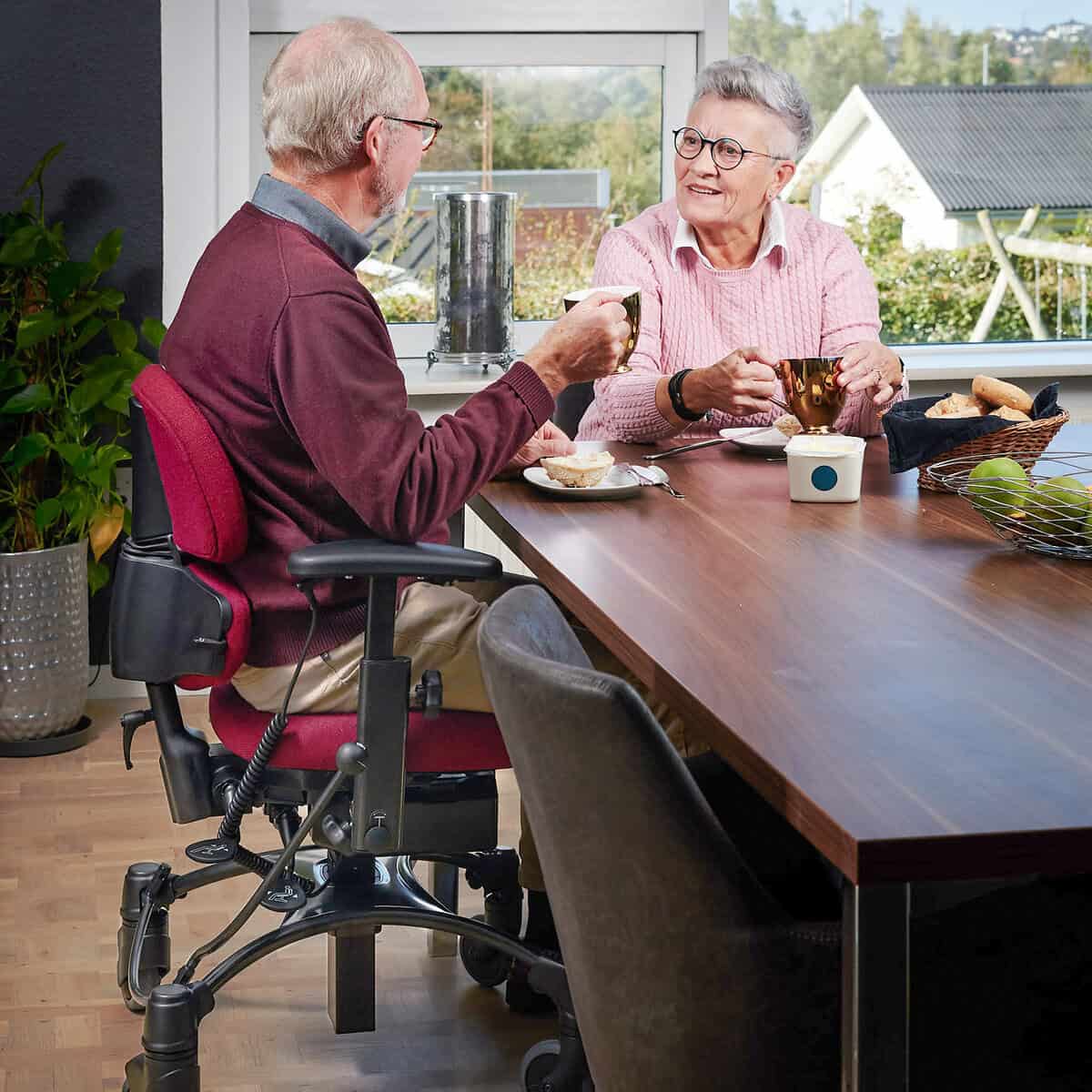
VELA Chairs provide an effective means for seniors to stay independent longer in their own homes, offering solutions to challenges identified in nursing homes such as safety and energy conservation. Equipped with features like a central brake for stability, electric height adjustability, and ease of movement, they ensure safer transitions during daily activities. The ease with which users can perform tasks like cooking, cleaning, or simply transitioning from one room to another illustrates the chairs’ potential to prolong independence, delaying the need for institutional care. By reducing the burden on caregivers, VELA Chairs not only improve quality of life but also promote values like dignity, safety, and autonomy. While not the sole solution, they are a proven and practical option for those seeking to maintain their independence and stay at home.
ButterflyMX. Senior Living Technology Trends 2025: Shaping the Future of Care
Sandberg Phoenix. Major CMS Revisions to Nursing Home Surveyor Guidance (2025)
Heisinger Bluffs. The Future of Senior Living: Trends to Watch in 2025
Health Industry Washington Watch. Recent Legislative and Regulatory Updates for Long-Term Care (June 2025)
Everything Medical Online. The Latest Trends in Mobility Aid Technology for 2025
The Consumer Voice. Summary of CMS’s Revised Guidance for Nursing Home Surveyors (Jan 2025)
CMS.gov. Revised Long-Term Care Surveyor Guidance (2025)
ECP123. California RCFE Regulation Changes 2025
GlobeNewswire. U.S. Assistive Technologies for Older Adults Market 2025
MedlinePlus/National Institutes of Health. Geriatric Assistive Devices Market Trends 2025
CMS.gov. Updates to Nursing Home Care Compare and Five Star (July 2025)
HealthLaw & Policy Insights. Impact of New Legislation on Skilled Nursing (July 2025)
HHS Rule Repealing Federal Nursing Home Staffing Mandate
CMS Nursing Homes Certification and Compliance
Medicare Rights – CMS Rescinds Nursing Home Staffing Requirements
Recent Legislative Updates for Long-Term Care
Assistive Technology Statistics and Facts (2026)
Aging and Health Technology Watch – February 2026